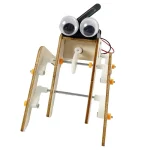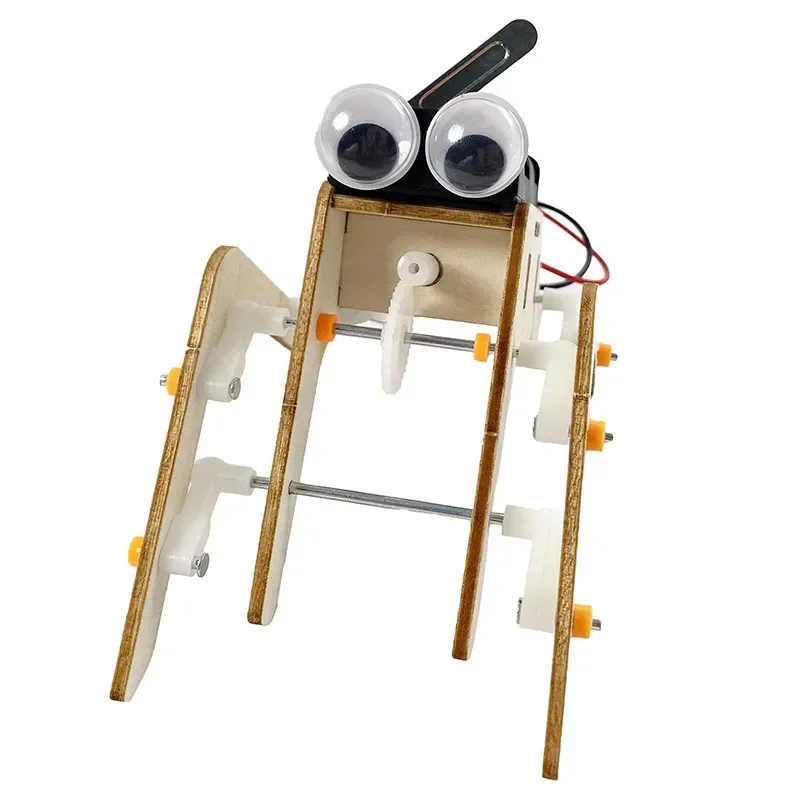
DIY Wooden Walking Spider Robot Kit
A wooden DIY kit that builds a small motorized spider robot that walks. A short, low-cost mechanical build for teens and adult hobbyists ages 14 and up.
- Build a walking bionic spider from laser-cut wooden parts
- Small DC motor and gears drive the legs
- Finished size about 4.7 x 2.8 x 3.1 in (12 x 7 x 8 cm)
- Recommended for ages 14 and up
Specs
| Frame material | Wood |
|---|---|
| Drive | Small DC motor with gears and cranks |
| Power | Two-cell battery holder (batteries not included) |
| Finished size | About 4.7 x 2.8 x 3.1 in (12 x 7 x 8 cm) |
| Assembly | DIY, assembly required |
| Recommended age | 14 and up |
In the box
- Laser-cut wooden sheet with frame and leg parts
- Small DC motor
- Two-cell battery holder with wires
- Plastic gears and six crank connectors
- Two metal axles
- Screws and small plastic fittings
- Two googly eyes
Good to know
- Assembly is required.
- Battery size for the two-cell holder isn't specified. Ask us before you order.
This wooden kit builds a small bionic spider robot that walks on its own motor. It suits teens and adults who enjoy mechanical models and want a short, hands-on science build that shows how a motor and gears turn into walking motion.
What it does
Once assembled, a small DC motor turns a gear train that drives cranks on the legs. The cranks move the legs in turn, so the spider steps forward across a table or floor. Two googly eyes give it a face.
Building and programming
There is no coding. You press the parts out of a laser-cut wooden sheet, fit the metal axles and plastic cranks, mount the motor and gears, and wire in the battery holder. It makes a good introduction to gears, cranks and simple circuits.
What you need
Two batteries for the holder, which aren’t part of the kit. The kit is recommended for ages 14 and up.
Good to know
The finished spider measures about 4.7 x 2.8 x 3.1 in (12 x 7 x 8 cm). The kit includes small parts such as screws and fittings, so keep them away from young children while you build.
Questions
Does it need batteries?
Yes. The holder takes two cells, and batteries aren't part of the kit. Battery size isn't specified, so ask us if you want to confirm it.
What age is it for?
Ages 14 and up.
Is there any coding?
No. It's a mechanical build: a motor and gears drive the legs.
Read before you buy
All guides Robot kits & learningRobot kits by age: what each one teaches, what it can’t, and the total costRobot kits by age, from block coding to Raspberry Pi, ROS 2 and AI arms: what each teaches, what it can't, and…21 min read
 Robot kits & learningLeRobot SO-101: what it is, what it really costs, and what you need to train itThe LeRobot SO-101 arm, priced part by part: open-source BOM, Seeed and WowRobo kits, cameras, power and GPU or cloud training. Every…21 min read
 Robot kits & learningRobotic chess boards compared: Chessnut, SenseRobot, GoChess, Square Off (now Miko) and PhantomFive robotic chess boards from their makers' own pages: how the pieces move, AI levels, Chess.com and Lichess, battery, weight, size and…19 min read
More stem robot kits
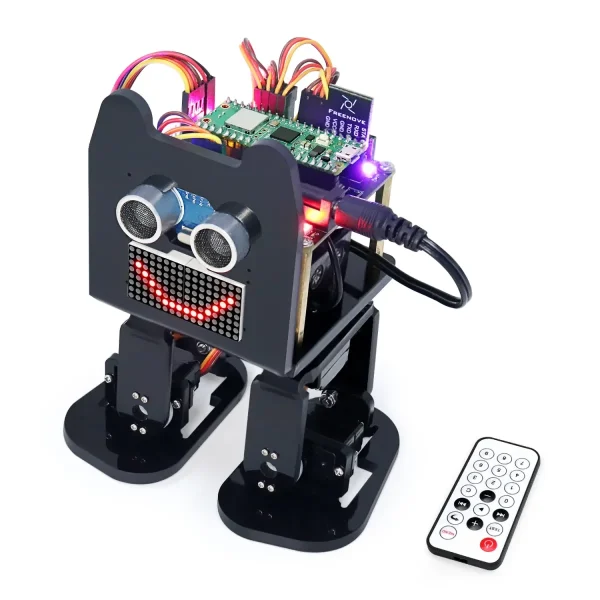
Freenove Bipedal Robot Kit for Raspberry Pi Pico, LED Matrix and App
Two-legged robot driven by four servos; you assemble it yourself
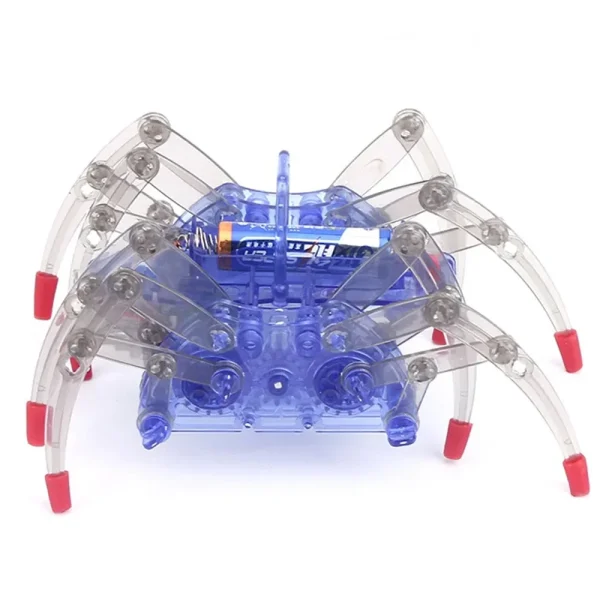
Electric Spider Robot Kit with Two Walking Modes
Build an eight-legged electric spider from a parts kit
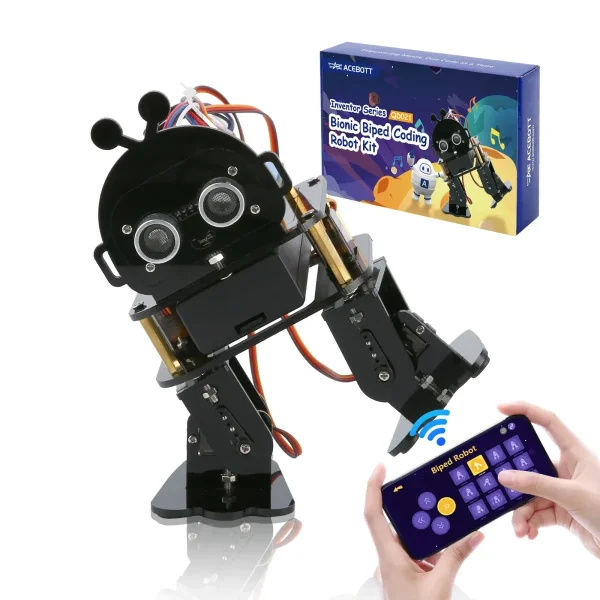
ACEBOTT Biped Robot Kit with ESP32, App and Block Coding
Two-legged robot with four MG90 metal-gear servos
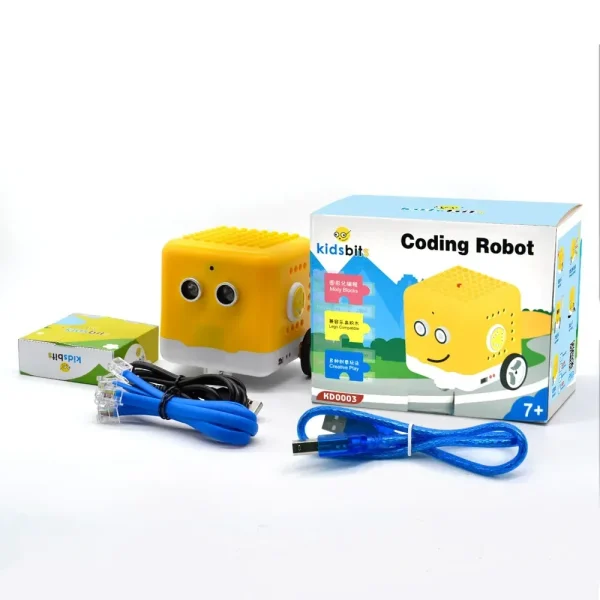
Kidsbits Coding Robot Kit with 28 Guided Projects
28 online projects: 14 graphical, 14 in C