On this pageContents
- 1. The short answer, one line per market
- 2. United States: what's in the duty stack now, and why every parcel pays
- 3. United States: DDP vs DAP, and who pays the duty
- 4. Australia: GST and import charges on overseas purchases
- 5. Worked examples: the same robot, two countries
- 6. Delivery windows and lithium-battery shipping
- 7. Returns from overseas: the real cost, and how the Fit check avoids it
- 8. Work out your delivered price (calculator)
- 9. What could change next
- Go deeper
- Frequently asked questions
- What this guide can't do
- Documents we checked
Not tax, customs or legal advice (as of 22 October 2026). This guide explains public rules in plain English and shows example arithmetic. Your actual duty depends on how customs classifies your exact product, its declared value, and the rules on the day it enters the country. For a binding answer, ask a licensed customs broker or the tax authority.
The one-line answer (buying from any overseas store): a robot made in China pays a stacked import duty in the US (we estimate about 12.5% to 40% for common home robots, depending on its tariff code) 36789, and 10% GST collected at checkout by a registered seller in Australia when the order is A$1,000 or less 3436. In Canada and the EU, our delivered prices include import fees paid by our shipping partner.
How Robot Central handles it: our supplier's shipping partner (the forwarder) is the importer of record for the US and Australia. It pays the import duties and fees, and that cost is already inside our price. We don't charge or collect GST. Import fees paid by our shipping partner. Nothing due at the door. In Canada and the EU, delivered prices include import fees paid by our shipping partner. For other countries, we confirm before you pay 43.
1. The short answer, one line per market
These are the general rules for anyone buying a robot from an overseas store. How Robot Central handles them is in the last row of the table below.
- United States: every parcel from China is now dutiable, whatever its value 22. The duty is the normal tariff rate, plus any older Section 301 "list" duty, plus a 12.5% Section 301 duty added on 24 July 2026 34.
- Australia: on goods worth A$1,000 or less, a registered seller collects 10% GST at checkout, and nothing more is due at the border 343638. Above A$1,000, GST, duty and clearance charges are collected at the border 35.
- Canada and the EU: delivered prices there include import fees paid by our shipping partner.
Comparison by country (rules as of 22 October 2026)
| United States | Australia | |
|---|---|---|
| Customs duty on a home robot from China | YesMFN rate + Section 301 list rate + 12.5% 34 | None on orders of A$1,000 or less; above that, assessed at the border 3538 |
| Low-value exemption | None: de minimis suspended for all countries 2122 | A$1,000 border threshold 38 |
| Sales tax / GST on the import | Not covered here (state sales tax is a separate question) | 10% 36 |
| Who collects it | The importer of record, at entry: the seller side under DDP, you under DAP | Registered seller at checkout (A$1,000 or less) 34 |
| How Robot Central handles it | Our shipping partner is the importer and pays the duty; the cost is inside our price. Nothing due at the door 43 | We don't charge or collect GST. Our shipping partner pays any import charges. Nothing due at the door 43 |
In Canada and the EU, delivered prices include import fees paid by our shipping partner.
2. United States: what's in the duty stack now, and why every parcel pays
The stack has three layers
A US import duty on a Chinese robot is not one number. It is three rates added together, all applied to the goods' customs value.
- The normal (MFN) rate for the robot's 10-digit tariff code. For the robot codes in the table below, it ranges from 0% to 4.2% 10111214.
- The older Section 301 "list" duty on Chinese goods, if the code is on a list. Lists 1 and 3 add 25% 67, List 4A adds 7.5% 8, and List 4B (15%) is suspended, so codes only on that list add nothing 9.
- The 2026 Section 301 duty: 12.5% on products of China, for goods entered from 12:01 a.m. ET on 24 July 2026 3. The US Trade Representative's notice says these goods "shall also be subject to" the normal rate and to any other additional duty in that chapter, so the 12.5% stacks on top of layers 1 and 2 4. Hong Kong products pay the same 12.5% 44.
Some goods are carved out of the 12.5%, such as goods under Section 232 metal tariffs and a list of products like computers and smartphones. None of the robot codes in the table below is on that product list for consumer goods 5. But 8479.89.95 (statistical number 8479.89.9599) is also on the Section 232 derivative-aluminum list. If aluminum makes up at least 15% of the robot's weight, a Section 232 duty applies instead of the 12.5%, so the layers differ 45. Confirm with a customs broker before relying on the 8479.89.95 figures for any robot.
Likely tariff codes for home robots (likely, confirm with a broker)
Likely totals: MFN rate plus older Section 301 list rate plus 12.5%. Codes are likely, not broker-confirmed. The window robot could be 16.7% or 40% depending on classification 1112.
Customs classifies the product, not the marketing name. The codes below are what we think is likely, based on the tariff schedule's own text and past US Customs (CBP) rulings on similar products. They are not a classification of any product we sell, and no licensed customs broker has confirmed them yet.
| Robot type | Likely HTS line | MFN rate | Older Section 301 list | 2026 add-on | Likely total | Basis |
|---|---|---|---|---|---|---|
| Window-cleaning robot (option A) | 8509.80.50, domestic electromechanical appliance | 4.2% 12 | List 4B, suspended: 0% 912 | 12.5% 3 | 16.7% | Heading covers home appliances up to 20 kg 13; no CBP ruling found for window robots 18 |
| Window-cleaning robot (option B) | 8479.89.95, machines not elsewhere specified | 2.5% 11 | List 3: 25% 711 | 12.5% 3 | 40% | Same: no ruling found 18 |
| Robotic pool cleaner | 8421.21.00, water-filtering apparatus | 0% 14 | List 1: 25% 614 | 12.5% 3 | 37.5% | CBP ruling N352394 on a cordless pool robot 14 |
| Robot vacuum | 8508.11.00, vacuum cleaners | 0% 15 | List 3: 25% 715 | 12.5% 3 | 37.5% | Tariff schedule 15 |
| STEM / educational robot kit (option A) | 9023.00.00, apparatus for demonstration | 0% 16 | List 4A: 7.5% 816 | 12.5% 3 | 20% | CBP rulings on a robot construction set sold to schools and on educational robot-kit parts 16 |
| Toy robot / kit sold as a toy (option B) | 9503.00.00, toys | 0% 17 | List 4B, suspended: 0% 917 | 12.5% 3 | 12.5% | CBP ruling on a children's robot play set 17 |
| "Industrial robot" | 8479.50.00 | 2.5% 10 | List 1: 25% 610 | 12.5% 3 | 40% | Tariff schedule 10 |
The window-robot gap is the biggest uncertainty in this guide. The same robot could pay about 16.7% or about 40% depending on classification 1112. That is why the code has to be confirmed by a licensed customs broker, and why we show both numbers below instead of picking the friendlier one.
Why every parcel pays: the end of de minimis
Until 2025, a US shopper could import goods worth $800 or less per person per day with no duty 23. For goods from China, that ended on 2 May 2025 21. That exemption, often called "de minimis" or "Section 321", is gone for now:
- 29 August 2025: the suspension applied to shipments from every country 21.
- 20 February 2026: a new executive order kept it suspended. It says the exemption "shall not apply to any shipment ... regardless of value, country of origin, mode of transportation, or method of entry" 22.
- 24 June 2026: CBP wrote an indefinite suspension into its own regulations for shipments of $800 or less by courier and freight, with a separate rule for mail 23.
- 13 August 2026: the Court of International Trade ruled for the government on two of the three claims (Counts I and II) in a challenge to the suspension; the third is still open 25.
- 1 July 2027: the statutory exemption is repealed by law 24.
What this means for you: a $99 robot kit and a $999 pool robot are both dutiable when they arrive from China 22. There is no longer a "small order" route that skips the duty.
What happened to the IEEPA tariffs?
In 2025 the US also charged emergency "IEEPA" tariffs on Chinese goods. On 20 February 2026 the Supreme Court ruled that the IEEPA law "does not authorize the President to impose tariffs" 1. A temporary 10% surcharge under a different law (Section 122) replaced them from 24 February to 24 July 2026 2. When it expired, the 12.5% Section 301 duty took over for Chinese goods 3.
IEEPA refunds are claimed by the importer of record, not the shopper. A customs broker reports that IEEPA refund requests go through CBP's CAPE system and are filed by importers that gave CBP a valid importer-of-record number [F26, secondary source]. If a seller imported your robot and paid the duty, any refund is between that importer and CBP. We haven't yet confirmed these details on a CBP page. On a Robot Central order, the importer of record is our supplier's shipping partner 43.
In plain terms: the court ruling did not make Chinese robots cheaper to import. The emergency tariffs went, and other duties replaced them 123.
3. United States: DDP vs DAP, and who pays the duty
What happens when you buy from any overseas store
Shipping terms decide who pays the duty:
| Term | Who pays the import duty | What you see |
|---|---|---|
| DDP (delivered duty paid) | The seller side pays at entry | One price; no bill at the door |
| DAP (delivered at place) | You, the buyer, when the parcel arrives | A lower sticker price, then a duty bill plus carrier fees at the door |
Under DAP, carriers such as UPS, FedEx and DHL usually charge the buyer a fee for clearing the parcel or for paying the duty on the buyer's behalf. These fees exist and vary by carrier and service. We could not confirm current amounts from the carriers' own published rate cards, so we don't quote them here 42.
State sales tax is separate from import duty, and this guide doesn't cover it. We haven't yet confirmed how it applies to Robot Central orders.
How Robot Central handles it
For US orders, our supplier's shipping partner (the forwarder) is the importer of record. It pays the import duty and fees at entry, and that cost is already inside the price you see 43. Import fees paid by our shipping partner. Nothing due at the door.
That's why our US prices already include the import costs: a duty bill of 12.5% to 40% plus carrier fees, arriving after you've paid, is a bad surprise 3111742. Our US sticker price is higher than a DAP price would be, because it already carries the duty a DAP buyer would pay at the door.
4. Australia: GST and import charges on overseas purchases
Several items in one box worth more than A$1,000 are taxed at the border 34.
In Australia: what happens when you buy from any overseas store
- A$1,000 or less: a GST-registered seller charges 10% GST at checkout 3436. That covers the import, so no GST or duty is charged at the border 38.
- What "A$1,000" measures: the customs value, meaning the sale price minus freight and insurance from the place of export. The GST itself is charged on the full price you pay, including shipping 34.
- Over A$1,000: the seller doesn't charge GST at checkout. GST, customs duty and clearance charges are collected from the importer at the border 35. We haven't confirmed the duty rates and charges for robot types; a customs broker can.
- Several items in one box: if low-value items ship together and the box is worth more than A$1,000, they are taxed at the border instead, and the seller doesn't charge GST on the sale 34.
- Who must register: overseas sellers with Australian sales of A$75,000 or more a year 37.
- GST charged twice? A refund must be sought from the seller; Home Affairs doesn't give refunds 38.
How Robot Central handles it: we don't charge or collect GST. Our supplier's shipping partner is the importer and pays any GST, duty and clearance charges due at import, and that cost is already inside our price 43. Import fees paid by our shipping partner. Nothing due at the door.
5. Worked examples: the same robot, two countries
These are illustrative examples, not quotes or Robot Central store prices. They show what the public rules add when you buy from any overseas store; Robot Central's prices already include these import costs 43. To make the countries comparable, we take one goods price in US dollars and convert it at the Federal Reserve's 16 October 2026 rate: A$1 = US$0.6950 39. We ignore freight and insurance, leave out US customs processing fees and carrier charges, and in the US we treat the goods price as the customs value. The value customs actually uses can differ; we haven't confirmed this with a broker.
Example A: a window-cleaning robot with a goods price of US$299
Illustrative, goods price only, before freight and fees. Goods prices: US$99 kit, US$299 window robot, US$599 pool cleaner.
| Country | Rate used (source, date) | Arithmetic | Illustrative total |
|---|---|---|---|
| US, option A (8509.80.50) | 4.2% MFN + 0% List 4B + 12.5% = 16.7% (HTS Rev. 21, 9 Oct 2026; USTR, 24 Jul 2026) 3912 | $299 × 16.7% = $49.93 duty | ≈ $348.93 |
| US, option B (8479.89.95) | 2.5% MFN + 25% List 3 + 12.5% = 40% (same sources) 3711 | $299 × 40% = $119.60 duty | ≈ $418.60 |
| Australia | GST 10% (ATO, 2026) 36; under A$1,000 34 | $299 ÷ 0.6950 = A$430.22 39; × 10% = A$43.02 GST | ≈ A$473.24 |
The brief for this guide estimated about $112 of US duty on a $299 window robot. With the 2.5% MFN rate added, the 40% option is $119.60 11. If customs accepts the 8509.80.50 line, it's about $49.93 12.
Example B: a STEM robot kit with a goods price of US$99
| Country | Rate used (source, date) | Arithmetic | Illustrative total |
|---|---|---|---|
| US, option A (toy, 9503.00.00) | 0% MFN + 0% List 4B + 12.5% = 12.5% 3917 | $99 × 12.5% = $12.38 duty | ≈ $111.38 |
| US, option B (educational apparatus, 9023.00.00) | 0% MFN + 7.5% List 4A + 12.5% = 20% 3816 | $99 × 20% = $19.80 duty | ≈ $118.80 |
| Australia | GST 10% 36 | $99 ÷ 0.6950 = A$142.45 39; × 10% = A$14.25 GST 34 | ≈ A$156.70 |
Example C (for scale): a robotic pool cleaner with a goods price of US$599
| Country | Rate used | Arithmetic | Illustrative total |
|---|---|---|---|
| US (8421.21.00) | 0% MFN + 25% List 1 + 12.5% = 37.5% 3614 | $599 × 37.5% = $224.63 duty | ≈ $823.63 |
| Australia | GST 10% 36 | $599 ÷ 0.6950 = A$861.87 39; under A$1,000 34; × 10% = A$86.19 | ≈ A$948.06 |
What the examples show: - The US is the only one of the two where customs duty is a big part of the price 338. - In the US, the tariff code moves the answer more than anything else: 16.7% vs 40% for the same window robot 1112. - Thresholds matter in Australia: a big order can cross the A$1,000 line 35.
6. Delivery windows and lithium-battery shipping
Delivery windows: we don't have written delivery windows from our supplier yet, so we don't quote any here. We will publish the supplier-stated window for each product, labeled as supplier-stated, and replace it with our own measured times once we have enough orders. We won't promise a date the supplier hasn't committed to in writing.
Why batteries change the route. Robots run on lithium-ion batteries, and air carriers follow IATA's dangerous-goods rules:
- Battery packed in the box but not installed (IATA PI 966): since 1 January 2026, these must ship at a state of charge of 30% or less (for smaller, Section II batteries, this applies above 2.7 Wh), unless the authorities of the State of Origin and the State of the Operator approve otherwise 40.
- Battery installed in the robot (PI 967): 30% or less is recommended, not mandatory 40.
- Size lines: batteries over 100 Wh, and cells over 20 Wh, fall under stricter rules 41.
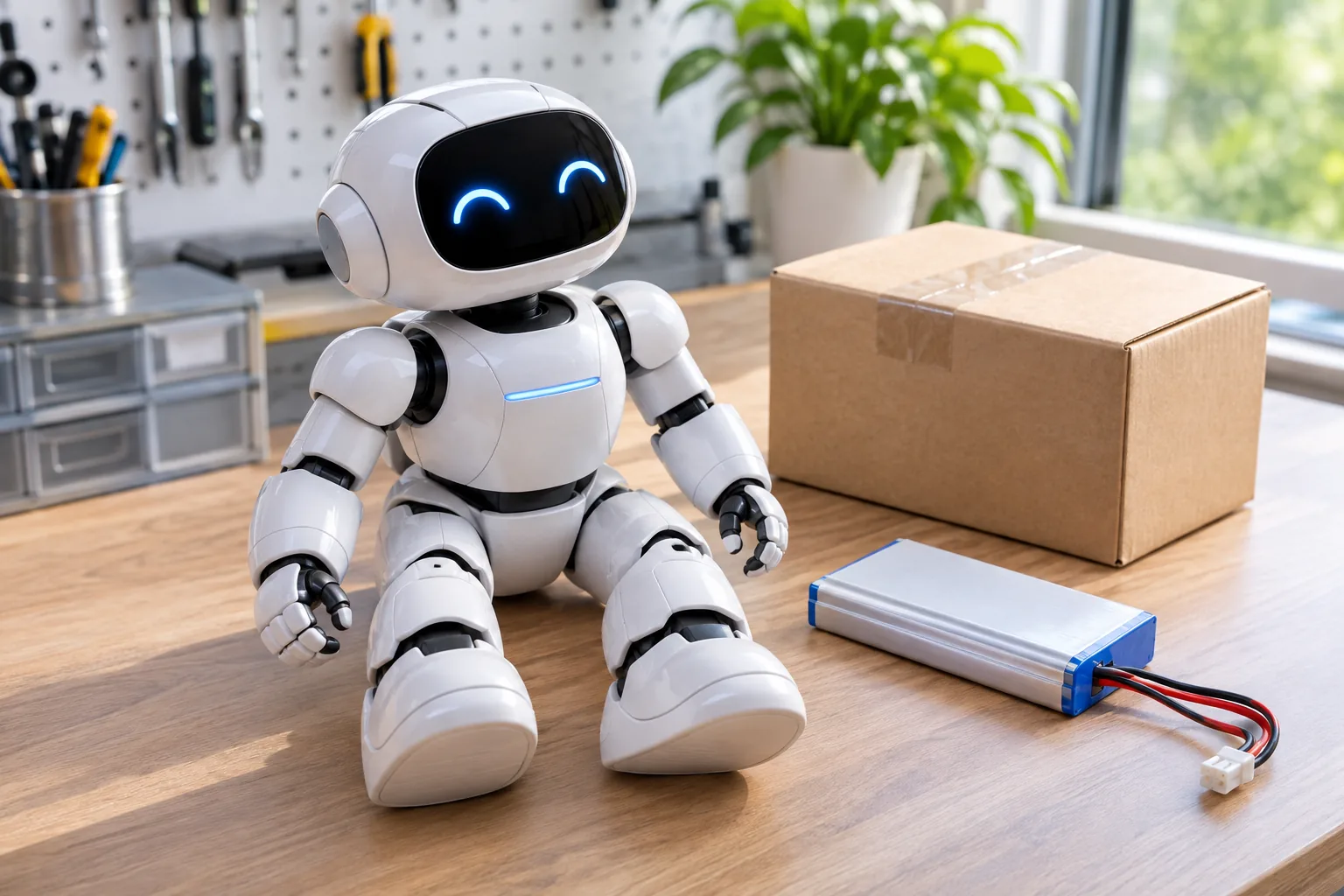
What this means for you: - Your robot may arrive with a low charge. Charge it fully before the first run. - Spare batteries can ship separately or take longer. - Large-battery robots may go by sea rather than air.
7. Returns from overseas: the real cost, and how the Fit check avoids it
A cross-border return is the most expensive way to find out a robot doesn't fit your windows, your pool or the person it's for. Here's what a return involves:
- Return freight to the seller's warehouse. For a robot with a lithium battery, this can be a dangerous-goods shipment 40. We don't have return-freight quotes per country yet.
- Taxes already paid. In Australia, a refund of GST charged twice must be sought from the seller, not Home Affairs 38. Whether US import duty can be recovered on a returned item is a question for a customs broker.
- Time. A return to China is another international shipment. We don't have a supplier-stated return transit time yet.
How the Fit check helps: before you buy, our Fit check asks about your glass, frame, pool or skill level and tells you if a robot is a poor fit. It is meant to catch an avoidable reason for a return before you pay. We'll describe any Fit check guarantee only once our returns policy is published.
8. Work out your delivered price (calculator)
Interactive tool coming soon.
Pick a robot type and your country. The calculator applies the rates in this guide, shows its arithmetic, and dates every rate. For products we sell, it will use the HTS line confirmed by a licensed customs broker. No product has a broker-confirmed line yet, so for now it shows the likely range from the tariff-code table above for every robot type.
Work out your delivered price →
From our store: we list our own models here only after we've verified the supplier's documents (spec sheet, FCC ID where relevant, battery test report). Until then, use the calculator and the tables above. [link:department page]
9. What could change next
- 9 November 2026: Section 301 exclusions expire. A set of product exclusions from the older China lists runs only through 9 November 2026 unless extended 19. Two are close to our categories: battery-powered, manually operated pool-water filters, and small programmable robots with a screen, camera and microphone but no "hands" 20. A robot that counts as either could see its duty rise by 25 points if the exclusions lapse: the pool-filter exclusion is from List 1 and the robot exclusion from List 2, both 25% 620. We'll re-check this guide after 9 November.
- A possible Section 232 tariff on robotics. The Commerce Department opened a national-security investigation into robot and industrial-machinery imports on 2 September 2025 27. A secondary tracker (CSIS, published 22 July 2026) lists the investigation as open, with its report overdue and no tariff announced 28. We haven't yet confirmed this on a Commerce Department or Federal Register page. If one comes, it could change the stack, because goods under Section 232 duties are carved out of the 12.5% 5.
- 1 July 2027: de minimis ends by law. The low-value exemption is already suspended. On 1 July 2027 the statute repealing it takes effect, so the "every parcel pays" rule stops depending on executive action 24.
- Court cases. The de minimis ruling of 13 August 2026 left one claim undecided 25. We haven't confirmed whether the ruling has been appealed.
Go deeper
- US tariffs on Chinese robots, by robot type → C01
- The IEEPA ruling: what it changed for robot buyers → C02
- DAP vs DDP: who pays the import duty? → C03
- The end of de minimis, explained → C04
- Australia GST on imported robots → C06
- Delivery windows by country → C07 · Lithium-battery shipping rules → C08
- Returning a robot that shipped from China → C09 · our returns policy
- The documents to ask for before you buy → C10 · Same robot, different delivered prices → C11
- Plugs, voltage and chargers → C12 · Door fees when duty is due on delivery → C13
- Separate from duty: whether a robot can be sold in the US at all under the FCC's robot rule → L01
- Every product page will show its own delivered price per country, built from the rules on this page.
Frequently asked questions
Do I pay import duty when the robot arrives? Not on a Robot Central order to the US, Canada, the EU or Australia. Our supplier's shipping partner is the importer, pays the import duties and fees, and the cost is already inside our price; we don't charge or collect GST. Import fees paid by our shipping partner. Nothing due at the door 43. In Canada and the EU, delivered prices include import fees paid by our shipping partner. For other countries, we confirm before you pay 43. Buying from other overseas stores, the general rules apply: a stacked duty in the US 3, and GST at checkout from a registered seller in Australia on orders of A$1,000 or less 34.
Why is the US price higher than the Australian price? The US charges a stacked duty on Chinese goods: about 12.5% to 40% for the robot types in this guide 36789. Australia charges 10% GST on orders of A$1,000 or less and no border duty 3638. Our prices already include these import costs 43.
Is GST charged at checkout in Australia? Yes, on goods worth A$1,000 or less from a GST-registered seller: 10%, collected at checkout 3436. Over A$1,000, GST, duty and clearance charges are collected at the border instead 35.
Can I avoid US duty with a small order? No. The $800 de minimis exemption is suspended for shipments from every country, whatever their value 2223.
How long does delivery take? We don't have written delivery windows from our supplier yet, so we don't quote one. Battery rules can slow or reroute some robots 40.
What does a return cost? Return freight to the seller, any taxes you can't recover, and time. We can't give a reliable number yet, because we don't have return-freight quotes. The Fit check exists to avoid the return in the first place.
What happens if tariffs change after I order? On a Robot Central order to the US or Australia, nothing is due at the door: our shipping partner pays the import duties and fees 43. Rates do change: the US rules changed in February and again in July 2026 123. We re-check this guide monthly and after every rule change.
Will I get a refund of the old IEEPA tariffs? Refunds are claimed by the importer of record [F26, secondary source]. If a seller imported your robot, any refund is between that importer and CBP, so ask the seller. We haven't yet confirmed this on a CBP page.
What this guide can't do
- It can't classify your robot. Only US Customs (CBP) settles the tariff code, for example in a binding ruling; a licensed broker can advise, and for window robots the likely duty ranges from 16.7% to 40% 111218.
- It can't predict policy. The examples use the rules in force on 22 October 2026 319.
- It doesn't cover US state sales tax, Australia's rules for business buyers, or Canadian and EU import rules, beyond the note that our delivered prices include import fees paid by our shipping partner.
- It can't quote carrier fees, because we couldn't confirm current published rate cards 42.
Documents we checked
| Document | Issuer | Date / version |
|---|---|---|
| Section 301 forced-labor final action notice 345 | USTR | Effective 24 Jul 2026 |
| Harmonized Tariff Schedule, Chapters 85 and 99 6-13192045 | USITC | 2026 Revision 21 (9 Oct 2026) |
| Rulings N352394, N314278, N042826, N316395 141617 | CBP | 2008-2025 |
| Learning Resources, Inc. v. Trump 1 | Supreme Court | 20 Feb 2026 |
| Proclamation 11012; Executive Order 14388 222 | White House (Federal Register) | 25 Feb 2026 |
| CBP Dec. 26-12 212324 | CBP | Effective 24 Jun 2026 |
| Axle of Dearborn v. Department of Commerce, Slip Op. 26-94 25 | CIT | 13 Aug 2026 |
| GST on low value imported goods; How Australian GST works 34-37 | ATO | Read 22 Oct 2026 |
| Notice 2018/13 38 | Home Affairs (ABF) | 2018 |
| H.10 exchange rates 39 | Federal Reserve | 16 Oct 2026 rates |
| Battery Guidance Document 4041 | IATA | Revised for 2026 regulations |

Hiwonder H5S 16-DOF Humanoid Robot Kit, Programmable, Assembled
16 high-voltage serial bus servos on an aluminum alloy body
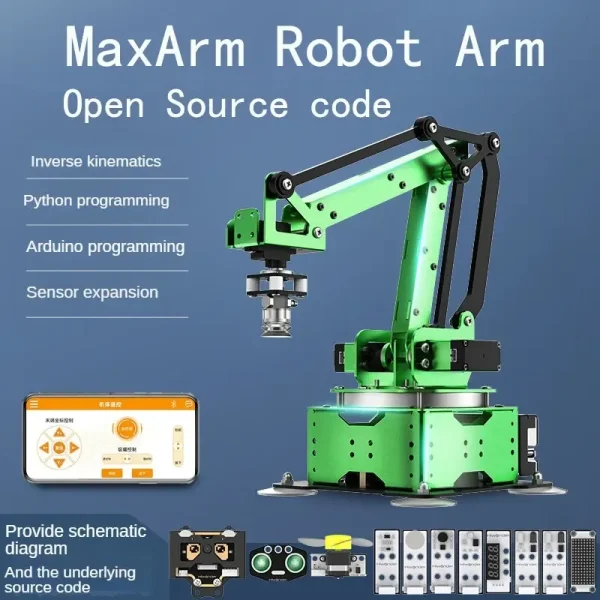
MaxArm Desktop Robot Arm Kit, ESP32, Python and Arduino
Ships assembled, with an open-source ESP32 controller and bus servos
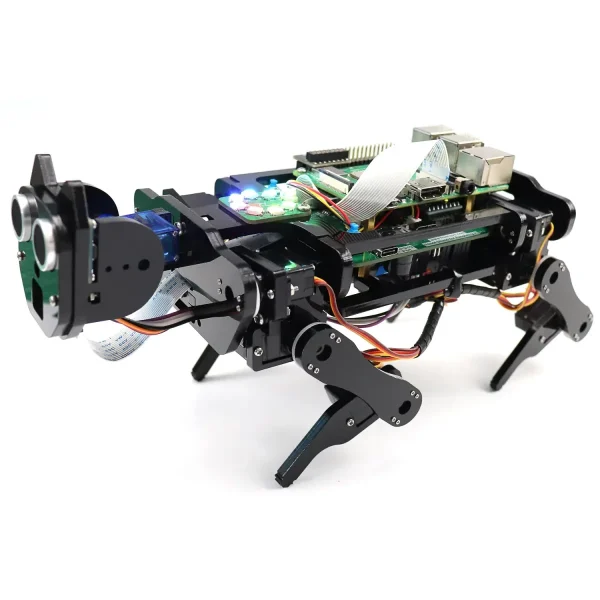
Freenove Robot Dog Kit for Raspberry Pi 5, 4 and Zero 2 W
Four-legged robot dog kit with 13 servos, a camera and an ultrasonic sensor
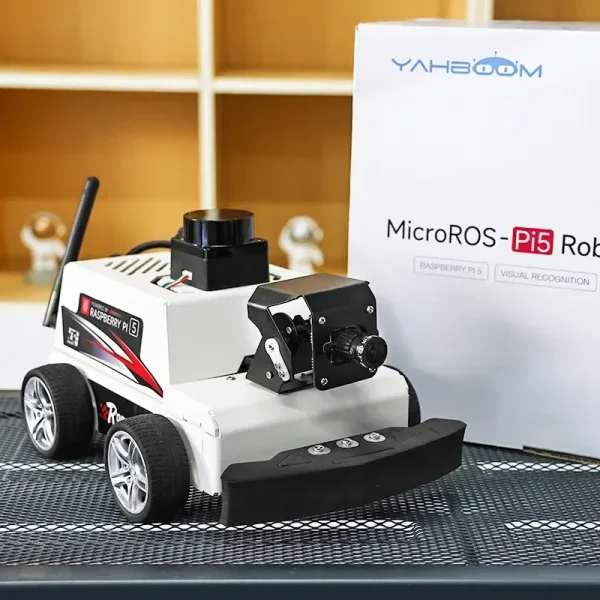
Yahboom MicroROS-Pi5 ROS2 Robot Car with Lidar for Raspberry Pi 5
MS200 360° lidar in every version, for SLAM mapping and navigation
Delivered prices, import fees paid by our shipping partner.
Sources and fact table
Every number on this page links to a row below: the claim, how strong the evidence is, the source, and when we checked it.
Fact table (39 facts)
| ID | Claim | Evidence | Source | Checked |
|---|---|---|---|---|
| F1 | Supreme Court held that IEEPA does not authorize the President to impose tariffs (Learning Resources, Inc. v. Trump, No. 24-1287, consolidated with No. 25-250) | Document-verified | supremecourt.gov | 2026-10-22 |
| F2 | Proclamation 11012 imposed a temporary 10% import surcharge under Section 122, effective 24 Feb 2026 for 150 days, through 12:01 a.m. EDT 24 Jul 2026 | Document-verified | govinfo.gov | 2026-10-22 |
| F3 | USTR imposed an additional Section 301 duty of 12.5% on products of China (forced-labor investigations), applicable to goods entered on or after 12:01 a.m. ET 24 Jul 2026; Hong Kong also 12.5% | Document-verified | ustr.gov | 2026-10-22 |
| F4 | The 12.5% stacks: products subject to headings 9903.05.20-9903.05.84 'shall also be subject to' the general (MFN) rate and 'to any additional duty provided for in this subchapter' (which includes the earlier China Section 301 list duties) | Document-verified | ustr.gov | 2026-10-22 |
| F5 | Exemptions from the 12.5%: goods subject to Section 232 actions (e.g., steel, aluminum, copper articles) and products listed in the annexes (e.g., computers 8471, smartphones 8517.13, semiconductors 8541/8542). None of the robot subheadings in this guide (8479.50, 8479.89.95, 8509.80.50, 8421.21, 8508.11, 9023.00, 9503.00) is exempt for consumer goods | Document-verified | ustr.gov | 2026-10-22 |
| F6 | China Section 301 List 1 (heading 9903.88.01) additional duty rate | Document-verified | hts.usitc.gov | 2026-10-22 |
| F7 | China Section 301 List 3 (heading 9903.88.03) additional duty rate | Document-verified | hts.usitc.gov | 2026-10-22 |
| F8 | China Section 301 List 4A (heading 9903.88.15) additional duty rate | Document-verified | hts.usitc.gov | 2026-10-22 |
| F9 | China Section 301 List 4B (heading 9903.88.16, 15%) is suspended, so goods listed only there pay no Section 301 list duty | Document-verified | hts.usitc.gov | 2026-10-22 |
| F10 | HTS 8479.50.00 'Industrial robots, not elsewhere specified or included': MFN (general) rate 2.5%; listed on China Section 301 List 1 | Document-verified | hts.usitc.gov | 2026-10-22 |
| F11 | HTS 8479.89.95 (machines and mechanical appliances, other, nesoi): MFN 2.5%; listed on China Section 301 List 3 | Document-verified | hts.usitc.gov | 2026-10-22 |
| F12 | HTS 8509.80.50 (electromechanical domestic appliances with self-contained motor, other): MFN 4.2%; listed only on suspended List 4B | Document-verified | hts.usitc.gov | 2026-10-22 |
| F13 | HTS Chapter 85 note 4: heading 8509 covers electromechanical machines of the kind commonly used for domestic purposes, including 'other machines provided the weight ... does not exceed 20 kg' | Document-verified | hts.usitc.gov | 2026-10-22 |
| F14 | CBP ruling N352394 classified a cordless robotic pool cleaner from China under 8421.21.0000 (filtering water), MFN 'Free', with Section 301 heading 9903.88.01 (List 1) | Document-verified | rulings.cbp.gov | 2026-10-22 |
| F15 | HTS 8508.11.00 (vacuum cleaners <=1,500 W, receptacle <=20 l; used for robot vacuums): MFN Free; listed on China Section 301 List 3 | Document-verified | hts.usitc.gov | 2026-10-22 |
| F16 | CBP has classified robot construction / educational robot kits under 9023.00.0000 (demonstrational apparatus), MFN Free; ruling N314278 (2020) adds Section 301 heading 9903.88.15 (List 4A) | Document-verified | rulings.cbp.gov | 2026-10-22 |
| F17 | HTS 9503.00.00 (toys): MFN Free; listed only on suspended List 4B; CBP classified a children's robot play set under 9503.00.0073 (N316395, 2020) | Document-verified | hts.usitc.gov | 2026-10-22 |
| F18 | A search of CBP's CROSS rulings database found no ruling classifying a window-cleaning robot | Not found | rulings.cbp.gov | 2026-10-22 |
| F19 | Section 301 product exclusions under headings 9903.88.69 and 9903.88.70 apply to entries through 9 Nov 2026 | Document-verified | hts.usitc.gov | 2026-10-22 |
| F20 | Two exclusions near our categories: (12) battery-powered, manually operated submersible pool-water filtering machinery (8421.21.0000); (20) programmable robots no more than 40 x 22 x 27 cm with LCD display, camera and microphone but without 'hands' (8543.70.9860) | Document-verified | hts.usitc.gov | 2026-10-22 |
| F21 | EO 14324 (30 Jul 2025) suspended duty-free de minimis treatment for all countries; the exemption has been suspended for all countries since at least 29 Aug 2025 | Document-verified | cbp.gov | 2026-10-22 |
| F22 | EO 14388 (20 Feb 2026) continued the suspension: the de minimis exemption 'shall not apply to any shipment ... regardless of value, country of origin, mode of transportation, or method of entry' | Document-verified | govinfo.gov | 2026-10-22 |
| F23 | CBP interim final rule (CBP Dec. 26-12) indefinitely suspends the de minimis exemption for imports valued at $800 or less arriving by all modes other than the international postal network; a concurrent rule covers postal shipments | Document-verified | cbp.gov | 2026-10-22 |
| F24 | The statutory de minimis exemption is repealed effective 1 Jul 2027 (One Big Beautiful Bill Act, Public Law 119-21, section 70531(b)) | Document-verified | cbp.gov | 2026-10-22 |
| F25 | The Court of International Trade granted summary judgment to the government on Counts I and II of a challenge to the de minimis suspension (Axle of Dearborn, Inc. v. Department of Commerce, Court No. 25-00091) | Document-verified | cit.uscourts.gov | 2026-10-22 |
| F27 | Commerce initiated a Section 232 national-security investigation of imports of robotics and industrial machinery on 2 Sep 2025 | Document-verified | govinfo.gov | 2026-10-22 |
| F28 | No robotics-specific Section 232 tariff had been announced as of October 2026 | Secondary | csis.org | 2026-10-22 |
| F34 | Australia: a seller of goods with a customs value of A$1,000 or less must collect GST from the customer (if registered); customs value = sale price minus freight and insurance from the place of export; GST is charged on the total price including shipping (ATO example: A$350 jeans incl. A$50 shipping, GST on A$350) | Document-verified | ato.gov.au | 2026-10-22 |
| F35 | Australia: for consignments over A$1,000, any GST, customs duty and clearance charges are charged to the importer at the border | Document-verified | ato.gov.au | 2026-10-22 |
| F36 | Australian GST rate is 10% (GST is 1/11th of a GST-inclusive price) | Document-verified | ato.gov.au | 2026-10-22 |
| F37 | Australia GST registration threshold: GST turnover from sales connected with Australia of A$75,000 or more | Document-verified | ato.gov.au | 2026-10-22 |
| F38 | From 1 Jul 2018 low-value goods (customs value A$1,000 or less) may attract GST at point of sale; the A$1,000 border threshold for GST and customs duty did not change; refunds of GST charged twice must be sought from the vendor | Document-verified | abf.gov.au | 2026-10-22 |
| F39 | Exchange rates, Federal Reserve H.10 (noon buying rates), 16 Oct 2026: 1 AUD = 0.6950 USD; 1 USD = 1.2798 SGD | Document-verified | federalreserve.gov | 2026-10-22 |
| F40 | IATA: from 1 Jan 2026, lithium-ion batteries packed with equipment (PI 966) must be shipped at a state of charge not exceeding 30% (Section II: batteries over 2.7 Wh); for batteries contained in equipment (PI 967) 30% is recommended, not mandatory | Document-verified | iata.org | 2026-10-22 |
| F41 | IATA classification lines: lithium-ion cells over 20 Wh and batteries over 100 Wh fall under the fully regulated sections; smaller ones under Section II | Document-verified | iata.org | 2026-10-22 |
| F42 | Carrier brokerage, entry and duty-advancement (disbursement) fees exist for UPS, FedEx and DHL; current official rate cards could not be retrieved (pages returned 403 or error) | Not found | Robot Central policy | 2026-10-22 |
| F43 | Robot Central delivery and tax policy: Robot Central does not charge or collect GST anywhere. The supplier's shipping partner (forwarder) is the importer of record and pays all import duties and fees for the US, Singapore and Australia; the cost is inside Robot Central's price. Customer line: 'Import fees paid by our shipping partner. Nothing due at the door.' Other countries: Robot Central confirms before the customer pays | Owner-stated | Robot Central policy | 2026-10-22 |
| F44 | Hong Kong products are also subject to the 12.5% Section 301 forced-labor duty | Document-verified | ustr.gov | 2026-10-22 |
| F45 | HTS Rev. 21, U.S. note 16(c)(ix) to subchapter III of ch. 99 lists 8479.89.9599 as a derivative aluminum article. Note 16(c): headings 9903.82.02-.26 apply to the full customs value where the listed metal is at least 15% of the article's weight. USTR note 52(f)(1): the 12.5% headings 9903.05.20-.84 do not apply to derivative aluminum articles under 9903.82.02 and 9903.82.04-.26. | Document-verified | hts.usitc.gov | 2026-10-22 |
Full source list
Sources & change log
Last checked: 22 October 2026, by The Robot Central Spec Desk. Next scheduled check: November 2026, and straight after 9 November 2026.
Primary sources - [F1] Supreme Court of the United States, Learning Resources, Inc. v. Trump, No. 24-1287 (20 Feb 2026): https://www.supremecourt.gov/opinions/25pdf/607us2r12_8nj9.pdf - [F2] Proclamation 11012, 91 FR 9339 (25 Feb 2026): https://www.govinfo.gov/content/pkg/FR-2026-02-25/html/2026-03824.htm - [F3][F4][F5][F44] USTR, Notice of Actions in Section 301 Investigations ... Forced Labor (July 2026): https://ustr.gov/sites/default/files/files/Press/Releases/2026/FLIP%20301%20Investigation%20Final%20Action%20FRN%207-23-26%20FINAL.pdf - [F6]-[F9][F19][F20][F45] USITC, HTS 2026 Revision 21, Chapter 99: https://hts.usitc.gov/reststop/file?release=currentRelease&filename=Chapter%2099 - [F10]-[F12][F15][F17] USITC HTS search: https://hts.usitc.gov/ - [F13] USITC, HTS Chapter 85 notes: https://hts.usitc.gov/reststop/file?release=currentRelease&filename=Chapter%2085 - [F14] CBP ruling N352394: https://rulings.cbp.gov/ruling/N352394 - [F16] CBP rulings N314278 and N042826: https://rulings.cbp.gov/ruling/N314278 · https://rulings.cbp.gov/ruling/N042826 - [F17] CBP ruling N316395: https://rulings.cbp.gov/ruling/N316395 - [F18] CBP CROSS search (no window-robot ruling found): https://rulings.cbp.gov/ - [F21][F23][F24] CBP Bulletin Vol. 60 No. 18, CBP Dec. 26-12: https://www.cbp.gov/sites/default/files/2026-07/260708_bulletin_vol_60_no_18.pdf - [F22] Executive Order 14388, 91 FR 9433: https://www.govinfo.gov/content/pkg/FR-2026-02-25/pdf/2026-03829.pdf - [F25] Court of International Trade, Slip Op. 26-94: https://www.cit.uscourts.gov/sites/cit/files/26-94.pdf - [F27] Commerce/BIS, Section 232 robotics investigation notice (26 Sep 2025): https://www.govinfo.gov/content/pkg/FR-2025-09-26/html/2025-18749.htm - [F34][F35] ATO, GST on low value imported goods: https://www.ato.gov.au/businesses-and-organisations/international-tax-for-business/gst-on-imported-goods-and-services/gst-on-low-value-imported-goods - [F36][F37] ATO, How Australian GST works: https://www.ato.gov.au/businesses-and-organisations/international-tax-for-business/gst-for-non-resident-businesses/how-australian-gst-works - [F38] Department of Home Affairs Notice 2018/13: https://www.abf.gov.au/help-and-support-subsite/CustomsNotices/2018-13.pdf - [F39] Federal Reserve H.10: https://www.federalreserve.gov/releases/h10/current/ - [F40][F41] IATA Battery Guidance Document (2026): iata.org
Secondary sources (labeled where used) - [F26] C.H. Robinson advisory on CBP CAPE refunds (17 Sep 2026): chrobinson.com - [F28] CSIS, Section 232 Explained (tracker): csis.org
Robot Central policy: [F43] owner delivery and tax decision of 22 October 2026 (our supplier's shipping partner is the importer of record and pays import duties and fees for the US and Australia, with the cost inside our price; Robot Central doesn't charge or collect GST; other countries confirmed before you pay).
Not used: carrier fee amounts [F42]. Secondary sites report figures, but no carrier page confirmed them.
Change log - 22 Oct 2026: first version. - 22 Oct 2026: fact-check corrections applied; Robot Central delivery and tax policy updated to the owner's decision of the same day. - 30 Oct 2026: re-scoped to the US, Canada, the EU and Australia; Singapore sections removed; Canada and EU note added.
Researched and drafted with AI assistance from the sources listed; fact-checked before publishing. The Robot Central Spec Desk is the name our editorial team writes under.