On this pageContents
- The short answer
- The 8 documents at a glance
- 1. FCC ID and grant (US)
- 2. UN38.3 test summary (battery transport)
- 3. Safety test report: CB, IEC 62368-1 or IEC 60335-1
- 4. Country registration: RCM (Australia)
- 5. EU Declaration of Conformity (CE)
- 6. The manual's safety and compliance pages
- 7. Warranty terms
- 8. Return and RMA terms
- What our "Documents we checked" badges mean
- What these documents can't tell you
- Country callouts
- From our store
- Frequently asked questions
- How we checked
Last checked: 23 October 2026 · By The Robot Central Spec Desk · Rules and lookup sites change. Check the date before you rely on a step.
How we made this page: every rule, lookup address and "what a fake looks like" sign below comes from the regulator's own page or rule text, read on the date above. One FCC record comes from a third-party copy of FCC data, and we label it that way. We haven't used the robots mentioned. This page is general information, not legal advice.
The short answer
It can be. Where a robot was made doesn't tell you whether it's a safe buy. The documents behind that exact model do. Ask the seller for eight of them, then check the ones you can check yourself:
- Two have public registers you can search: the FCC's equipment database in the US and the EESS register behind Australia's RCM mark 327. The EU also lists the bodies allowed to check CE products 45.
- Two can only be checked with the lab or body that issued them: the battery's UN38.3 test summary and a safety test report (often a CB report) 1621. We know of no public register for UN38.3 summaries.
- Three are the seller's own promises: the manual, the warranty and the return terms. In Australia, consumer law sits underneath them, even for overseas sellers 47.
A seller who can't produce these for the model you're buying is the real warning sign, wherever it ships from.
Full disclosure: Robot Central is a small store registered in Singapore, and our robots ship from the factories that make them in China 53. Hold every seller to this checklist, us included.
The 8 documents at a glance
| # | Document | What it proves | What it doesn't prove | Can you look it up? | Red flag |
|---|---|---|---|---|---|
| 1 | FCC ID and grant (US) | The radio was certified, and the grant names who's responsible 555 | That the robot is safe to use, or that the unit in your box is the one certified | Yesthe FCC's equipment database (EAS) 3 | A grantee code containing 0 or 1, or an ID with no grant 15 |
| 2 | UN38.3 test summary (battery) | The battery type passed the UN transport tests 15 | That the battery or charger is safe in daily use | No public register; check with the named lab 16 | Missing any of the ten required items 16 |
| 3 | Safety test report (CB, IEC 62368-1 or IEC 60335-1) | A lab checked the product against an international safety standard 212223 | A local approval on its own (Australia's regulator, for one, doesn't accept overseas marks automatically) 32 | CB certificates: the IECEE site 26 | An IEC or IECEE logo on the product or the listing 21 |
| 4 | Country registration: RCM (AU) | A local business registered the product and answers for it 29 | Anything about other countries | YesEESS Platform (AU) 27 | A label with no matching register entry |
| 5 | EU Declaration of Conformity (CE) | The maker signed a dated statement naming the EU rules and standards it meets 44 | That anyone outside the maker checked it, unless a notified body is named 45 | Notified bodies: NANDO 45 | A "CE certificate" from a lab that isn't a notified body 45 |
| 6 | Manual with safety section | The maker documented setup, limits and warnings for this model | That those warnings are enough for your home | Download from the maker's own site | No maker name, model number or compliance page 89 |
| 7 | Warranty terms | Who repairs or replaces, for how long, and who pays 48 | That the seller can actually be reached | Read it before you pay 46 | No warranty text until after purchase |
| 8 | Return / RMA terms | Where a return goes, who pays, and how to start one | That a faulty battery may go back by air 19 | Read it before you pay | No written return address or process |
The sections below take each document in turn: what to ask for, how to check it, and what a fake looks like.
1. FCC ID and grant (US)
What it proves. Robots with Wi-Fi or Bluetooth contain radio transmitters, and FCC rules require those to be certified before they're marketed 55. A certified device carries an FCC ID, and "No FCC Identifier may be used on equipment to be marketed unless that specific identifier has been validated by a grant" 5. The grant is the document that matters. The label just points to it.
Where to find it. The label shows the words "FCC ID" in capitals, followed by the code 4. A robot with a screen may show it electronically instead, and on very small devices without a screen it goes in the manual, plus on the box or a removable label 24.
How to check it. Search the FCC's Equipment Authorization System (EAS) at apps.fcc.gov/oetcf/eas/reports/GenericSearch.cfm 3. Our step-by-step walkthrough is in The US FCC robot rule explained, and a fuller how-to is coming in How to look up a robot's FCC ID. One practical warning: the FCC's site blocked our automated tools on 23 October 2026 14. Third-party copies of FCC data, such as fccid.io, loaded for us when EAS didn't 12. Treat them as a way to read a record, then confirm it in EAS before you rely on it.
A worked example (from an FCC ID mirror, secondary). Unitree's R1 humanoid shows how to read a grant, and how to tie it to the brand:
| What the record shows | Value | What to compare it with |
|---|---|---|
| FCC ID | 2A5PE-YUSHU010 12 | The label on the robot |
| Grantee | YuShu Technology Co., Ltd., 88 Dongliu Rd, Binjiang District, Hangzhou 12 | Unitree's own site lists "Yushu Technology Co., Ltd." and its Hangzhou HQ at No. 88 Dongliu Road 13 |
| Issued by | TUV Rheinland of North America, Inc., under the FCC's authority 12 | A real grant names the FCC or a certification body |
| Date of grant | 22 June 2026 12 | Before or after 28 July 2026 (see below) 11 |
| Notes | "R1 Humanoid Robot" 12 | The product you're buying |
So the R1 was authorized on 22 June 2026 under FCC ID 2A5PE-YUSHU010, according to the mirror 12. We couldn't open the FCC's own record to confirm it 14. Here the grantee name isn't the brand name, which is why the address match matters.
Why the date matters now. On 28 July 2026 the FCC said new foreign-made "advanced robotic devices" are generally barred from authorization, while models it authorized earlier can still be imported and sold 11. What counts as covered, and the exclusions, are in our FCC rule guide.
What a fake looks like: - A grantee code in the wrong format. It's three characters if it starts with a letter and five if it starts with a number from 2 to 9, and the FCC says it "does not contain the numbers one and/or zero" 1. A code like "0AB12" can't be real. - An ID that returns no grant, or a grant for a different product or company 5. - An FCC logo but no FCC ID on a Wi-Fi or Bluetooth robot. The logo is optional and only for products under the supplier's declaration route (SDoC) 6. Those products aren't in the FCC database at all 2. A radio transmitter needs certification 55. - An SDoC with no US contact. The party responsible for an SDoC "must be located within the United States", and its name and contact details go in the manual or on a separate sheet 7. - A test lab's "FCC certificate" PDF instead of a grant. Only a grant validates an FCC ID 5.
A UN38.3 summary and a CB report have no public register: check with the lab or body named on them 1621.
2. UN38.3 test summary (battery transport)
What it proves. Every lithium cell or battery shipped under US rules must be of a type proven to meet section 38.3 of the UN Manual of Tests and Criteria 15. These are transport tests. A battery-pack report that Lenovo published, for example, lists eight, labeled T1 to T8: altitude simulation, thermal, vibration, shock, short circuit, crush, overcharge and forced discharge 20.
What it doesn't prove. That the battery is safe while charging in your living room. In-use safety is the subject of a different standard, IEC 62133-2, for portable sealed lithium cells and batteries 25. Our upcoming explainer covers what a battery test report proves.
What to ask for. The test summary, not the full report. US rules require manufacturers and later distributors of lithium batteries to make one available 16. The full report stays with the maker, who must show it to government officials on request 15.
How to check it. There's no public register, so check the summary itself. US rules say it must contain all ten of these 16:
- the maker's name, address, phone, email and website (two items);
- the test lab's name and full contact details;
- a unique test report number, and the report date (two items);
- a battery description: lithium ion or metal, mass, watt-hours (or lithium content), a physical description, and the battery or product model number;
- the list of tests and their pass or fail results;
- a reference to assembled-battery testing, where it applies;
- the edition of the UN Manual used;
- the name and title of a responsible person.
Then match the model number to the battery in the robot, and contact the lab named on it to confirm the report number.
What a fake looks like: - Missing items from the list above, especially the lab's contact details or a responsible person 16. - A summary for a different battery than the one in your robot 16. - Only "Revision 3" of the UN Manual cited. Older editions are fine if they're Revision 3, Amendment 1 or later, but types meeting only Revision 3 are no longer valid 18. - A lithium-ion battery with no watt-hour rating on its case. US rules have required that marking since 10 May 2024 17.
3. Safety test report: CB, IEC 62368-1 or IEC 60335-1
What it proves. That a lab checked the product's construction and ran the tests in an international safety standard. Two standards to look for: IEC 60335-1, for household appliances, battery-operated ones included 23, and IEC 62368-1, for audio, video and information technology equipment 22. Which one applies depends on the product, so the report should name the standard and its edition.
What a CB report is. Under the IECEE's CB Scheme, a National Certification Body issues "a CB Test Certificate and associated CB Test Report" 21. Reports are written on a standard-specific IECEE form, for example the form for IEC 62368-1:2023 2224. The scheme's rules are about bodies recognizing each other's test results, so a CB report supports approvals elsewhere but isn't an approval itself 21. One certification body, UL Solutions, says a CB investigation doesn't result in UL's own product safety certification or the right to use UL's marks 21.
How to check it. Ask for the CB certificate number and the certification body's name. The IECEE runs a certificate site at certificates.iecee.org 26. It needs a full browser, and our tools couldn't run a search on it 26.
What a fake looks like: - An IEC or IECEE logo on the product, box or listing. Their use is restricted to official IEC and IECEE documents 21. - A CB certificate used as advertising. Certificate holders agree not to use them "in any form of advertising or sales promotion" 21. - A certificate holder, model or standard edition that doesn't match the product and the report.
4. Country registration: RCM (Australia)
These prove something the international documents can't: that a business in your country registered the product and is answerable for it.
Australia: the RCM mark and the EESS register
What it proves. The Regulatory Compliance Mark (RCM) is "a trade mark for electrical safety for equipment which is compliant with the EESS" 27. The same mark shows compliance with ACMA's radio rules, and ACMA's label can be the RCM symbol or a QR code linking to a page showing it 32. A CE or FCC mark alone doesn't let a product be sold in Australia 32.
Who registers. The EESS Responsible Supplier "must be an Australian or New Zealand legal entity" with an ABN or NZ IRD number 29. ACMA registration also asks for an address in Australia 33. ACMA treats a business that ships products from an overseas distributor to Australian customers as an importer 34. So ask an overseas seller: who is your Australian responsible supplier?
How to check it. Search the EESS Platform at eessplatform.eess.gov.au/prweb/PRAuth/Public. It covers equipment registrations, certifications and registered suppliers, and needs no account 27. It replaced the old ERAC database on 14 October 2024, so ignore lookup guides that send you to the old site 27.
Which part to look up. The EESS treats equipment with an input rating of 49 V AC or 119 V DC or less as out of scope 31. If a robot runs from a low-voltage battery, the part plugged into the wall, its charger, may be the registered item. The EESS itself is run by four states (Queensland, Victoria, Western Australia and Tasmania), with others "progressing or considering" joining 28.
What a fake looks like: - An RCM on the box but no matching supplier or model on the EESS Platform 27. - A "responsible supplier" that's an overseas company. It can't be one 29. - Only CE or FCC marks on a product sold to Australians 32. - An expired high-risk (Level 3) registration. A Level 3 registration can't run past the expiry date of the Certificate of Conformity it was registered with 30.
5. EU Declaration of Conformity (CE)
Why ask, if you're not in the EU? CE is the EU's marking 45. Australia's regulator says a CE mark alone doesn't let a product be supplied there 32, and the US has its own FCC system 2. But a proper Declaration of Conformity shows the maker keeps a paper trail, and it names the standards it used.
What it proves. With a CE mark, "the manufacturer indicates that a product meets the requirements set out in EU product rules" 45. For many products the maker assesses itself; a notified body is involved only where the law requires one 45.
How to check it. A real declaration contains 44: - the maker's name and full address; - the model or type, and a way to trace the product; - a statement that the maker takes full responsibility; - the EU laws and the standards used; - the notified body's details, if one was used; - a name, a signature and a date.
If a notified body was used, its 4-digit number must appear next to the CE mark 45. Look the number up in the EU's NANDO database 45.
What a fake looks like: - A "CE certificate" from a private lab. The European Commission warns that some organizations offer "voluntary certificates" that aren't valid for CE marking 45. - A declaration with no signature, date, model or list of standards 44. - A notified-body number that isn't in NANDO 45.

6. The manual's safety and compliance pages
What it proves. That the maker wrote down how this model is meant to be set up and used, and what it can't do. For window robots, for example, the manuals are where the real outside-use limits live. Our high-rise window robot guide compares those limits for six window robots, from four manuals and two product pages.
What a real manual for a US radio device usually contains: - the FCC Part 15 statement, "This device complies with part 15 of the FCC Rules..." (it goes on the device; for very small devices without a screen, in the manual plus on the box or a removable label) 8; - a warning that unapproved changes "could void the user's authority to operate the equipment" 9; - for many digital devices, a Class B interference notice 10; - for products under the supplier's-declaration route, a compliance statement naming a US responsible party 7.
How to check it. Download the manual from the maker's own website and match the model number to the label. Then read the safety section and the limits before you buy, not after.
What a fake looks like: a manual with no maker name or address, a different model number, or no compliance pages, especially for a robot with Wi-Fi or Bluetooth.
7. Warranty terms
What it proves. Who will repair or replace the robot, for how long, where, and who pays to ship it.
The rules behind it: - US: for products costing more than $15 with a written warranty, sellers must let you read the warranty before you buy 46. A seller taking orders without a store visit must show the text, or where to read it, near the product description 46. - Australia: an overseas business selling directly to Australians "must follow the Australian Consumer Law, including the consumer guarantees" 47. A written warranty against defects must give the business's name, address, email and phone, how to claim, how long it lasts and who pays claim costs. It must also carry mandatory text beginning "Our goods come with guarantees that cannot be excluded under the Australian Consumer Law" 48.
What a weak or fake warranty looks like: - No warranty text until after you've paid 46. - An Australian warranty with no mandatory text, or one that claims to replace your consumer guarantees 4849. - No street address or email, only a chat handle.
8. Return and RMA terms
What it proves. That a return has somewhere to go and a process to follow. A cross-border return is the costly way to learn a robot doesn't fit. What it involves is in the delivered-price guide, and return costs get a full page in C09.
Ask, in writing: - Where does a return go? A local address, or a factory overseas? - Who pays the freight, both ways? In Australia, if the business confirms a fault it must repay your reasonable return costs 49. - How do you start one? Is there an RMA (return authorization) number, and how long does it take? - Is there a change-of-mind policy? Australian law doesn't require one, but a business that has one must honor it 49. - What if the battery is the problem? In the US, a damaged or defective lithium battery being returned for safety reasons may go only by road, rail or sea, in special packaging 19. From the US, a seller who tells you to air-ship it back isn't following those rules.
What a fake looks like: no written return address, a "no refunds" policy (illegal for faulty goods in Australia) 49, or return steps that only begin after you've paid.
What our "Documents we checked" badges mean
Every Robot Central product page has a "Documents we checked" row, and each badge links here. Each one carries an evidence level 54:
| Badge | What it means | Example |
|---|---|---|
| Document-verified | We read the document and checked its number with the issuer, where a public register exists 54 | "Authorized on [date] under FCC ID [ID]", once the grant is confirmed in EAS |
| Supplier-stated | Taken from the supplier's spec sheet or manual, dated, not independently checked 54 | A battery capacity from the spec sheet |
| Owner-reported | Patterns across public owner reports, with links and a count, never a rating 54 | "Several owners report edge streaks on frameless glass (5 linked reports)" |
| Supplier-provided, not verified | We have the document but no public way to verify it 54 | A UN38.3 summary whose lab hasn't confirmed it |
| Unconfirmed (status, not an evidence level) | We couldn't check it yet | An FCC status while EAS is blocked to our tools 14 |
We don't use the word "approved" for FCC status. A model is either "authorized on [date] under FCC ID [ID]" or "unconfirmed". Our methodology page, How we evaluate, will set out the full rules.
What these documents can't tell you
- Whether the robot is safe for your use. No document here covers a high-rise window, a pool with children in it, or a dog that chews cables. Read the manual's limits for that.
- Whether the unit in your box is the one registered. A register shows a model was registered.
- Anything about a battery's in-use safety, from UN38.3 alone. It's a transport test 15.
- Whether an FCC ID mirror is right. It's a copy. Confirm in EAS 14.
- Whether you can enforce a warranty overseas. The law may be on your side and still be hard to use against a seller with no local presence 47.
- Every state's rules. The EESS covers four Australian states 28, and we haven't compiled US state warranty or return laws.
Country callouts
In the US: ask for the FCC ID and look up the grant, and check its date against 28 July 2026 11. A supplier's-declaration product must name a US responsible party 7. Lithium-ion batteries should carry a watt-hour marking 17. A damaged battery, or one the maker has flagged as defective for safety reasons, can't come back by air 19. See our FCC rule guide.
In the EU: ask for the signed Declaration of Conformity. If a notified body was used, its 4-digit number must appear next to the CE mark, and you can look it up in NANDO 4445.
In Australia: look for the RCM and search the EESS Platform 27. A CE or FCC mark isn't enough 32. Ask who the Australian responsible supplier is 29. Overseas sellers must follow the Australian Consumer Law 47. Our RCM guide will go deeper.
From our store
From our store: we list our own models here only after we've verified the supplier's documents (spec sheet, FCC ID where relevant, battery test report). Until then, use the checklist above. Browse the store
How Robot Central handles delivery: Import fees paid by our shipping partner. Nothing due at the door 51. Robot Central never charges or collects GST 51.
Robot Central Frontier (robot dogs and humanoids, by quote): you're the importer and pay the import duties and taxes. Each quote shows our estimate of them 52.
Frequently asked questions
Is it safe to buy from China?
It depends on the product and the seller, not the country. For a robot, ask for the eight documents above. Check the FCC ID (US) or RCM registration (Australia) in the official registers 327. A seller who can't produce them for your exact model is the warning sign.
How do I check an FCC ID?
Find "FCC ID" on the label, in the manual or on screen 24. Then search the grantee code and product code in the FCC's EAS 3. Check the grantee, product and grant date. Our FCC rule guide has the steps.
What is a UN38.3 test summary?
A short document showing a lithium battery type passed the UN transport tests 15. Under US rules it must list ten items, including the lab, a report number, the battery model and a responsible person 16. It doesn't show the battery is safe in daily use.
How do I check RCM registration in Australia?
Search the EESS Platform public search, which covers registered equipment and suppliers 27. For a battery robot, look up the charger too, since low-voltage equipment is out of EESS scope 31.
Is a CE mark enough in Australia?
Not in Australia: ACMA says a product with only an overseas mark, such as CE or FCC, can't automatically be supplied there 32. A CE declaration is still useful evidence of the maker's paperwork 44.
What does a CB test certificate prove?
That a National Certification Body found the product met an IEC safety standard. It comes with a CB test report 21. The scheme exists so test results can be recognized between certification bodies, but the certificate isn't a local approval by itself 21.
Do I have warranty rights if I buy from an overseas store?
In Australia, yes: overseas businesses selling directly to Australians must follow the Australian Consumer Law 47. In the US, read the written warranty, which sellers must make available before you buy 46.
Who pays to return a faulty robot?
It depends on the country and the seller's terms. In Australia, the business must repay reasonable return costs once it confirms a fault 49. Get the seller's terms in writing before you pay.
How we checked
- Where: regulators' own pages and rule text: the FCC, US federal regulations (eCFR), Australia's EESS and ACMA, the European Commission and the ACCC. We also used IEC Webstore listings, a certification body's published CB Scheme terms, and one battery report a manufacturer published.
- When: the date at the top of this page.
- FCC: the FCC's site returned "403" to our tools 14. We read the FCC ID help page through an Internet Archive copy dated 10 October 2026 1. The R1 record is from fccid.io, a third-party copy of FCC data, and is labeled secondary 12.
- Lookup sites: the EESS Platform and NANDO loaded on 23 October 2026. Several need a full browser, so we didn't run searches on them 2627.
- What we haven't done: used any robot named here, or had this page reviewed by a lawyer. It's general information, not legal advice.
- AI disclosure: researched and drafted with AI assistance from the sources listed; fact-checked before publishing.
Found a rule or a lookup address that's changed? Tell us at [corrections email] and we'll fix it and log it.
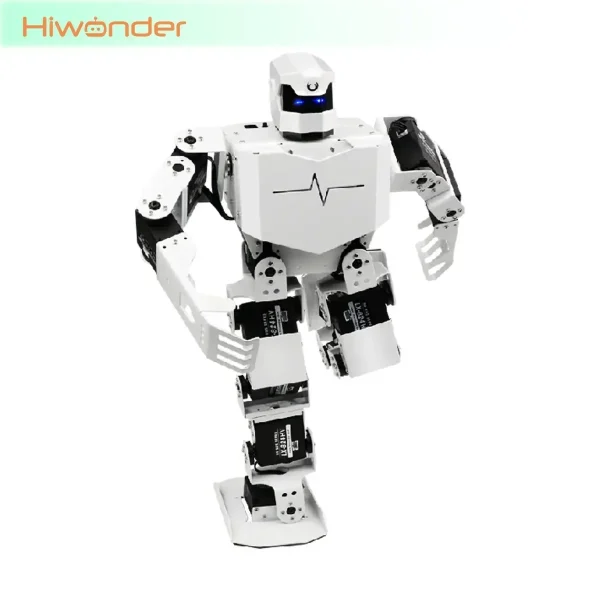
Hiwonder H5S 16-DOF Humanoid Robot Kit, Programmable, Assembled
16 high-voltage serial bus servos on an aluminum alloy body
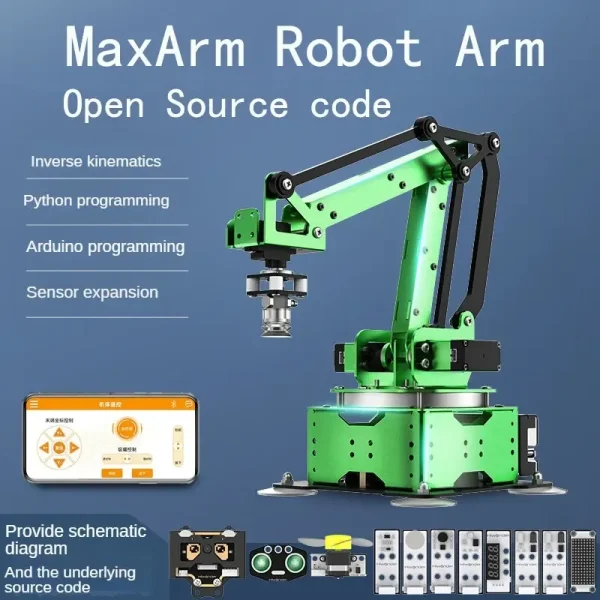
MaxArm Desktop Robot Arm Kit, ESP32, Python and Arduino
Ships assembled, with an open-source ESP32 controller and bus servos
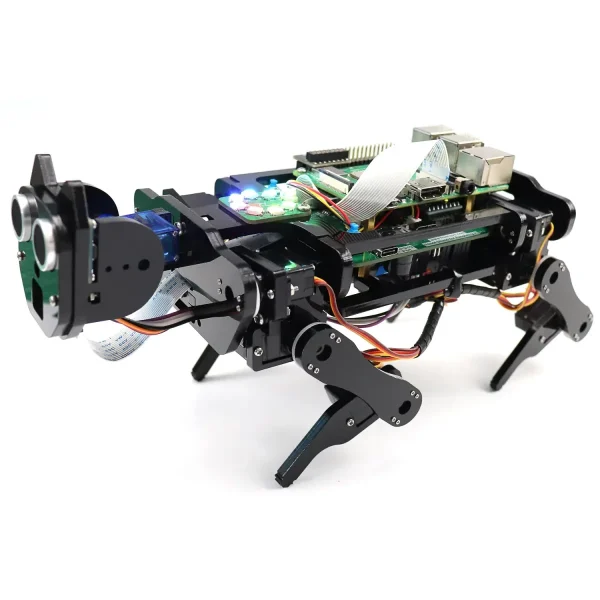
Freenove Robot Dog Kit for Raspberry Pi 5, 4 and Zero 2 W
Four-legged robot dog kit with 13 servos, a camera and an ultrasonic sensor
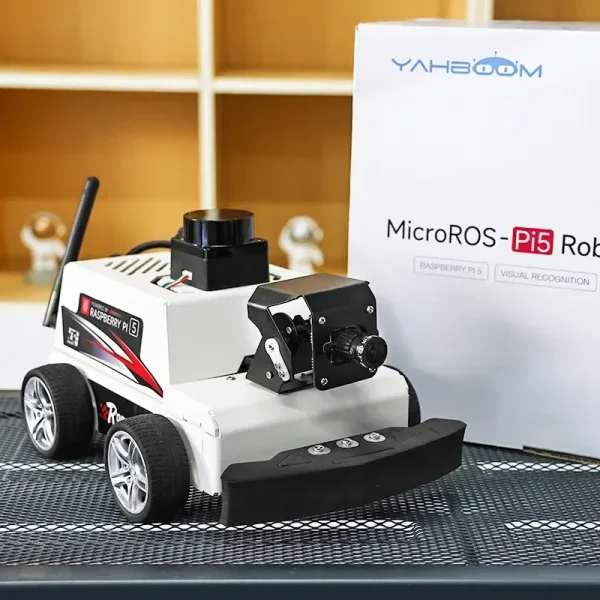
Yahboom MicroROS-Pi5 ROS2 Robot Car with Lidar for Raspberry Pi 5
MS200 360° lidar in every version, for SLAM mapping and navigation
Delivered prices, import fees paid by our shipping partner.
Sources and fact table
Every number on this page links to a row below: the claim, how strong the evidence is, the source, and when we checked it.
Fact table (45 facts)
| ID | Claim | Evidence | Source | Checked |
|---|---|---|---|---|
| F1 | FCC ID format: two elements, grantee code + product code. Grantee code is 3 characters if it starts with a letter (A-Z), 5 characters if it starts with a number (2-9); it 'does not contain the numbers one and/or zero'. Product code is assigned by the grantee and may include hyphens/dashes. | Document-verified | fcc.gov | 2026-10-23 |
| F2 | FCC ID page: products approved under SDoC 'are not required to be filed with the FCC and thus will NOT be in the FCC Equipment Authorization database'; 'if your equipment does NOT have an FCC ID clearly labeled on it, it will NOT be in this equipment authorization database'; if a device has a built-in display the FCC ID may be provided electronically; check the user manual | Document-verified | fcc.gov | 2026-10-23 |
| F3 | FCC advanced search (EAS) address given on the FCC ID page; the quick search form asks for 'Grantee Code: (First three or five characters of FCCID)' and 'Product Code: (Remaining characters of FCCID)' | Document-verified | fcc.gov | 2026-10-23 |
| F4 | 47 CFR 2.925(a)(1): FCC Identifier 'shall be preceded by the term FCC ID in capital letters on a single line', legible without magnification; (a)(3) information may be provided electronically (2.935); small devices: FCC ID in the user manual and on packaging or a removable label | Document-verified | ecfr.gov | 2026-10-23 |
| F5 | 47 CFR 2.926(e): 'No FCC Identifier may be used on equipment to be marketed unless that specific identifier has been validated by a grant of equipment certification'; 2.926(d): product code of numerals, capital letters and dashes, total not exceeding 14 | Document-verified | ecfr.gov | 2026-10-23 |
| F6 | 47 CFR 2.1074: SDoC devices are identified by the responsible party in a format that can't be confused with an FCC ID; the FCC logo may be used on a voluntary basis and 'does not alleviate the requirement to provide the compliance information required by section 2.1077' | Document-verified | ecfr.gov | 2026-10-23 |
| F7 | 47 CFR 2.1077: SDoC compliance information statement must be supplied with the product: product name and model, a compliance statement, and the responsible party's name, address and phone or internet contact; 'The responsible party for Supplier's Declaration of Conformity must be located within the United States'; it goes in the user's manual or a separate sheet | Document-verified | ecfr.gov | 2026-10-23 |
| F8 | 47 CFR 15.19(a)(3) label statement: 'This device complies with part 15 of the FCC Rules. Operation is subject to the following two conditions: (1) This device may not cause harmful interference, and (2) this device must accept any interference received, including interference that may cause undesired operation.'; 15.19(a)(5): where the device is too small to label and has no display for electronic labeling, the statement goes in the user manual and also on the packaging or a removable label | Document-verified | ecfr.gov | 2026-10-23 |
| F9 | 47 CFR 15.21: the user's manual must caution that changes or modifications not expressly approved by the party responsible for compliance could void the user's authority to operate the equipment | Document-verified | ecfr.gov | 2026-10-23 |
| F10 | 47 CFR 15.105(b): the manual for a Class B digital device must include a statement that the equipment complies with the limits for a Class B digital device under part 15 of the FCC Rules, with interference advice | Document-verified | ecfr.gov | 2026-10-23 |
| F11 | FCC fact sheet, July 28, 2026: new foreign-produced advanced robotic devices 'are generally prohibited from receiving FCC authorization'; the update 'does not prohibit the import, sale, or use of any existing models ... the FCC previously authorized' | Document-verified | docs.fcc.gov | 2026-10-23 |
| F12 | FCC ID mirror record 2A5PE-YUSHU010: 'TCB GRANT OF EQUIPMENT AUTHORIZATION' issued under the authority of the FCC by TUV Rheinland of North America, Inc.; Date of Grant 06/22/2026; Application Dated 05/22/2026; grantee YuShu Technology Co., Ltd., 88 Dongliu Rd, XiXing Street, Binjiang District, Hangzhou; Notes 'R1 Humanoid Robot'; equipment classes include Part 15 Low Power Communication Device Transmitter, Unlicensed National Information Infrastructure TX and Digital Transmission System | Secondary | fccid.io | 2026-10-23 |
| F13 | Unitree's own site footer: 'Yushu Technology Co., Ltd. All Rights Reserved'; Hangzhou headquarters address: No. 88 Dongliu Road, Binjiang District, Hangzhou | Document-verified | unitree.com | 2026-10-23 |
| F14 | Our access check: fcc.gov/oet/ea/fccid and the EAS search (apps.fcc.gov) returned HTTP 403 to our fetchers on 2026-10-23; the fcc.report mirror also returned 403 | Document-verified | apps.fcc.gov | 2026-10-23 |
| F15 | 49 CFR 173.185(a)(1): each lithium cell or battery must be of a type proven to meet part III, sub-section 38.3 of the UN Manual of Tests and Criteria; (a)(2) the manufacturer must keep a record of the testing (e.g. test report) and make it available to a Federal, state or local government representative on request | Document-verified | ecfr.gov | 2026-10-23 |
| F16 | 49 CFR 173.185(a)(3): each manufacturer and subsequent distributor of lithium cells or batteries (except button cells installed in equipment) manufactured on or after January 1, 2008 must make a test summary available, with 10 elements: (i) manufacturer name; (ii) manufacturer address, phone, email, website; (iii) test lab name, address, phone, email, website; (iv) unique test report ID number; (v) date of test report; (vi) description: lithium ion or metal, mass, watt-hour rating or lithium content, physical description, cell/battery model number or product model number; (vii) list of tests and results (pass/fail); (viii) reference to assembled battery testing (if applicable); (ix) reference to the UN Manual edition and amendments used; (x) name and title of a responsible person | Document-verified | ecfr.gov | 2026-10-23 |
| F17 | 49 CFR 173.185(a)(5): 'Beginning May 10, 2024, each lithium ion battery must be marked with the Watt-hour rating on the outside case.' | Document-verified | ecfr.gov | 2026-10-23 |
| F18 | 49 CFR 173.185(a)(1)(i)-(ii): types meeting 38.3 of the UN Manual Revision 3, Amendment 1 or any later revision applicable at the date of type testing may continue to be transported; types meeting only Revision 3 are no longer valid | Document-verified | ecfr.gov | 2026-10-23 |
| F19 | 49 CFR 173.185(f): damaged or defective lithium cells or batteries (e.g. being returned to the manufacturer for safety reasons) 'may be transported by highway, rail or vessel only', in specified packaging marked 'Damaged/defective lithium ion battery' in characters at least 12 mm high | Document-verified | ecfr.gov | 2026-10-23 |
| F20 | Lenovo-published UN38.3 battery pack test report (pack L17C6P71): test summary lists T1 Altitude simulation, T2 Thermal, T3 Vibration, T4 Shock, T5 Short Circuit, T6 Crush, T7 Overcharge, T8 Forced discharge, each 'Pass'; Test Spec ST/SG/AC.10/11/Rev.5 Amend.1&2; test period 2017/05/16-2017/06/02 | Document-verified | static.lenovo.com | 2026-10-23 |
| F21 | UL Solutions CB Scheme service terms (11/04/2025): the National Certification Body evaluates products under the IECEE and issues 'a CB Test Certificate and associated CB Test Report'; 'CB Test Certificates shall not be used in any form of advertising or sales promotion'; the IEC, IECEE and IEC/IECEE logos are restricted to official documents published by IEC/IECEE; a CB investigation does not result in UL product safety certification or authorization to use UL's marks; the NCB may withdraw a certificate; the terms cite the IECEE rules 'for Recognition of Results of Testing to Standards for Safety of Electrical Equipment ("CB Scheme") – IECEE Publication 02' | Document-verified | ul.com | 2026-10-23 |
| F22 | IEC 62368-1:2023, Edition 4.0, published 2023-05-26: 'Audio/video, information and communication technology equipment - Part 1: Safety requirements'; a product safety standard that 'classifies energy sources' and 'prescribes safeguards against those energy sources' | Document-verified | webstore.iec.ch | 2026-10-23 |
| F23 | IEC 60335-1:2020, Edition 6.0, published 2020-09-02: deals with the safety of electrical appliances for household and similar purposes, rated not more than 250 V single-phase and 480 V for other appliances, including DC and battery-operated appliances | Document-verified | webstore.iec.ch | 2026-10-23 |
| F24 | IECEE Test Report Form 62368-1F:2025, published 2025-06-13: 'This Test Report Form applies to: IEC 62368-1:2023' | Document-verified | webstore.iec.ch | 2026-10-23 |
| F25 | IEC 62133-2:2017 specifies requirements and tests for the safe operation of portable sealed secondary lithium cells and batteries containing non-acid electrolyte | Document-verified | webstore.iec.ch | 2026-10-23 |
| F26 | IECEE certificate site certificates.iecee.org loads (page title 'IECEE Certificates') but is a JavaScript app; our fetcher could not run a search | Document-verified | certificates.iecee.org | 2026-10-23 |
| F27 | EESS: 'Regulatory Compliance Mark (RCM) is a trade mark for electrical safety for equipment which is compliant with the EESS'; public search 'to search for EESS equipment registrations / certifications and registered responsible suppliers', no account needed; the legacy registration database was replaced by the EESS Platform from 14 October 2024 | Document-verified | eess.gov.au | 2026-10-23 |
| F28 | EESS participating jurisdictions (signatories to the Intergovernmental Agreement): Queensland, Western Australian, Victorian and Tasmanian Governments; 'Other jurisdictions are currently progressing or considering implementation of the EESS' | Document-verified | eess.gov.au | 2026-10-23 |
| F29 | EESS steps for compliance: the Responsible Supplier 'must be an Australian or New Zealand legal entity' and hold an ABN or NZ IRD number; 'Level 2 and 3 In-scope electrical equipment must be registered'; later sellers must source from a registered Responsible Supplier and ensure the equipment carries the RCM | Document-verified | eess.gov.au | 2026-10-23 |
| F30 | EESS Level 3: registration requires 'a valid and current Certificate of Conformity' issued by a recognised certifier listed in the National Register (EESS Platform); registration expiry is set to the certificate's expiry if earlier; Level 3 = high risk per EESS In-scope Equipment Definitions and Risk Levels v4.3 | Document-verified | eess.gov.au | 2026-10-23 |
| F31 | EESS FAQ: 'Not in scope' equipment has an input rating of 49 VAC or less or 119 VDC or less (e.g. household equipment rated 5 V, 12 V, 25 V); in-scope equipment works with voltages above 50 V AC or 120 V DC | Document-verified | eess.gov.au | 2026-10-23 |
| F32 | ACMA: a compliance label is the RCM symbol or a QR code (or similar) linking to a web page that displays the RCM prominently; 'You cannot automatically supply a product with an overseas compliance mark (for example, the CE or FCC mark)' | Document-verified | acma.gov.au | 2026-10-23 |
| F33 | ACMA: suppliers register on the national database, called the EESS Platform; when registering, give 'an address in Australia'; select 'ACMA only' if the product doesn't have to meet the EESS equipment safety rules | Document-verified | acma.gov.au | 2026-10-23 |
| F34 | ACMA: 'If you ship a product from an overseas distributor to a customer in Australia, we consider you an importer'; importers can include Amazon and Etsy sellers; suppliers cannot automatically supply products with only overseas markings | Document-verified | acma.gov.au | 2026-10-23 |
| F44 | Your Europe: the EU declaration of conformity must contain the manufacturer's (or authorised representative's) name and full business address; the product's serial number, model or type identification; a statement of full responsibility; identification allowing traceability; notified body details (if applicable); the legislation complied with; harmonised standards or other means used; name and signature; date of issue. It must be translated into the language(s) required by the EU country where the product is sold | Document-verified | europa.eu | 2026-10-23 |
| F45 | Your Europe, CE marking: 'the manufacturer indicates that a product meets the requirements set out in EU product rules'; 'If a notified body is used, its 4-digit ID number must appear next to the CE marking'; notified bodies are listed in NANDO; 'Some organisations offer voluntary certificates that are not valid for CE marking'; self-assessment is allowed where the law allows it | Document-verified | europa.eu | 2026-10-23 |
| F46 | 16 CFR 702.3: for consumer products actually costing more than $15.00 with a written warranty, the seller must make the warranty text available to prospective buyers before sale; a seller taking orders by catalog or mail order (ordering instructions that don't require a visit) must disclose the full warranty text, or the warrantor's website address and how to get a free copy, close to the product description | Document-verified | ecfr.gov | 2026-10-23 |
| F47 | ACCC: 'When an overseas business sells products directly to consumers in Australia, the business must follow the Australian Consumer Law, including the consumer guarantees'; it can be difficult in practice to get a remedy from an overseas business; consumers aren't covered if the business doesn't officially offer products in Australia (e.g. shipped to an overseas address and forwarded) | Document-verified | accc.gov.au | 2026-10-23 |
| F48 | ACCC: a warranty against defects must include the business's name, address, email and phone; what the consumer must do to claim; how to claim; what the business will do; how long it lasts; who pays expenses of a claim; that its benefits are in addition to other rights; and the mandatory text, which for goods begins 'Our goods come with guarantees that cannot be excluded under the Australian Consumer Law.' | Document-verified | accc.gov.au | 2026-10-23 |
| F49 | ACCC repair, replace, refund: for a major problem the business must offer a refund or a replacement; consumers return products that can be posted, businesses collect large or heavy items; if the business confirms the problem it must reimburse reasonable return costs; no remedy for change of mind, but a business with a change-of-mind policy must follow it; 'no refunds' policies that deny these rights are illegal | Document-verified | accc.gov.au | 2026-10-23 |
| F51 | Robot Central store delivery and tax policy: 'Import fees paid by our shipping partner. Nothing due at the door.' Robot Central never charges or collects GST. | Owner-reported | Robot Central policy | 2026-10-23 |
| F52 | Robot Central Frontier policy: robots sold by quote; the buyer is the importer and pays duties and taxes; each quote shows Robot Central's estimate of those charges; Robot Central does not charge or collect GST | Owner-reported | Robot Central policy | 2026-10-23 |
| F53 | Robot Central positioning: a small robot store registered in Singapore that sells to Singapore, Australia and the US; its robots ship from the factories that make them in China | Owner-reported | Robot Central policy | 2026-10-23 |
| F54 | Robot Central evidence levels: Document-verified (we read the document and checked its number with the issuer where a public database exists); Supplier-stated (from the supplier's spec sheet or manual, dated, not independently checked); Owner-reported; Robot Central-tested (not available yet). Certificates we can't verify are labeled 'supplier-provided, not verified'; Owner-reported = patterns across public owner reports (Reddit, forums, marketplace Q&A, YouTube), with a minimum sample and links; report counts, never a rating (paige_seo_strategy.md §5.2) | Owner-reported | Robot Central policy | 2026-10-23 |
| F55 | 47 CFR 15.201(b): except as exempted, 'all intentional radiators operating under the provisions of this part shall be certified by the Telecommunication Certification Bodies ... prior to marketing' (intentional radiators include Wi-Fi and Bluetooth transmitters) | Document-verified | ecfr.gov | 2026-10-23 |
Full source list
Sources
Read on 23 October 2026 unless noted.
United States (primary): - FCC, FCC ID search help page (live page returned 403; read via Internet Archive copy of 10 Oct 2026): https://www.fcc.gov/oet/ea/fccid · archive: web.archive.org - FCC Equipment Authorization System: https://apps.fcc.gov/oetcf/eas/reports/GenericSearch.cfm (returned 403 to our tools) - FCC fact sheet, 28 Jul 2026: https://docs.fcc.gov/public/attachments/DOC-423682A1.txt - 47 CFR 2.925, 2.926, 2.1074, 2.1077: https://www.ecfr.gov/current/title-47/section-2.925 · https://www.ecfr.gov/current/title-47/section-2.926 · https://www.ecfr.gov/current/title-47/section-2.1074 · https://www.ecfr.gov/current/title-47/section-2.1077 - 47 CFR 15.19, 15.21, 15.105, 15.201: https://www.ecfr.gov/current/title-47/section-15.19 · https://www.ecfr.gov/current/title-47/section-15.21 · https://www.ecfr.gov/current/title-47/section-15.105 · https://www.ecfr.gov/current/title-47/section-15.201 - 49 CFR 173.185 (lithium cells and batteries): https://www.ecfr.gov/current/title-49/section-173.185 - 16 CFR 702.3 (pre-sale availability of warranty terms): https://www.ecfr.gov/current/title-16/section-702.3
Australia (primary): - EESS home and public search: https://www.eess.gov.au/ · https://eessplatform.eess.gov.au/prweb/PRAuth/Public - EESS participating jurisdictions: https://www.eess.gov.au/about/participating-jurisdictions/ - EESS steps for compliance: https://www.eess.gov.au/equipment/selling-electrical-equipment-in-australia/steps-for-compliance-with-eess/ - EESS Level 3: https://www.eess.gov.au/registration/registration-in-scope-electrical-equipment/level-3/ · in-scope equipment definitions and risk levels (v4.3): https://www.eess.gov.au/wp-content/uploads/2024/07/EESS-Inscope-Equipment-Definitions-and-Risk-Levels-v4.3-Approved.pdf - EESS FAQ: https://www.eess.gov.au/about/faq/ - ACMA, label your product: https://www.acma.gov.au/step-5-label-your-product · register as a responsible supplier: https://www.acma.gov.au/step-4-register-responsible-supplier · know what you must do: https://www.acma.gov.au/know-what-you-must-do - ACCC, consumer rights and guarantees: https://www.accc.gov.au/consumers/buying-products-and-services/consumer-rights-and-guarantees · warranties: https://www.accc.gov.au/consumers/buying-products-and-services/warranties · repair, replace, refund: https://www.accc.gov.au/consumers/problems-with-products-and-services-you-buy/repair-replace-refund-cancel
European Union (primary): - Your Europe, signing a declaration of conformity: https://europa.eu/youreurope/business/product-rules-compliance/general-product-compliance/signing-declaration-conformity/index_en.htm - Your Europe, CE marking: https://europa.eu/youreurope/business/product-requirements/labels-markings/ce-marking/index_en.htm - NANDO notified bodies database: https://webgate.ec.europa.eu/single-market-compliance-space/notified-bodies
Standards and certification bodies: - IEC 62368-1:2023: webstore.iec.ch · IEC 60335-1:2020: webstore.iec.ch · IECEE TRF 62368-1F:2025: webstore.iec.ch · IEC 62133-2:2017: webstore.iec.ch - IECEE certificates: certificates.iecee.org - UL Solutions, CB Scheme service terms (4 Nov 2025): https://www.ul.com/sites/default/files/2025-11/Terms_CB_Scheme_11_04_2025.pdf
Manufacturers (primary): - Lenovo, UN38.3 battery pack report (format example): static.lenovo.com - Unitree contact page (company name and address): unitree.com
Secondary (labeled where used): - fccid.io, copy of FCC record 2A5PE-YUSHU010: fccid.io
Robot Central: delivery and tax policy, Frontier quote terms and evidence levels: [policy page URLs at publish]
Change log: 23 October 2026: first version.