On this pageContents
- The short answer
- Debris × device: what handles what
- The micron scale: debris sizes against filter mesh
- Gum leaves and big leaves
- Sand, silt and fine dust
- Algae: what a robot can and can't do
- Pollen and bugs
- Which filter to fit, and when
- What no pool cleaner here can do
- Country notes
- Before you buy
- FAQ
- Documents we checked
- Keep reading
The short answer
Match the cleaner to where the debris sits and how small it is. Floating gum leaves, pollen and bugs are a skimmer's job. Sunken leaves and sand are a robot's job: use the standard basket for leaves, and an ultra-fine filter only for fine dust. Algae is a chlorine-and-pH problem. A robot that cleans walls can help clear it and collect it, but no robot or skimmer can stop it growing back.
The numbers behind that: the standard robot filters with a published rating run from 150 to 250 µm 61214, which is coarser than silt (under 50 µm) 2429. Only the ultra-fine options, at 3 or 10 µm, reach into that range 1071230.
Deciding between a skimmer and a robot in the first place? That's covered in solar pool skimmer vs robotic pool cleaner. For which robot fits your pool's size, surface and depth, see the pool robots guide. This page goes one level down: debris by debris, and filter by filter.
Debris × device: what handles what
From published specs and the sources below. "Handles" means the maker lists that debris or the published ratings cover it on paper; it isn't a measured capture rate.
| Debris | Where it sits | Size | Solar skimmer | Robot, standard filter | Robot, ultra-fine filter | What else it needs |
|---|---|---|---|---|---|---|
| Gum leaves, floating | Surface, until they soak up water and sink 5 | River red gum: 10–20 cm long, 1–2 cm wide 27 | Yes, its main job. Basket size matters: 9 L on the iSkim, 4 L on the EcoSurfer S2 13 | Only a robot that lists surface cleaning, such as the Sora 70 8; the Sora 30, for one, doesn't clean the surface 6 | Not this job; Beatbot's Sora 70 ultra-fine basket is "Not intended for surface cleaning" 9 | Daily emptying in heavy leaf fall |
| Gum leaves and big leaves, sunk | Floor | As above 27 | No. Skimmers can't pick up what has settled 5 | Yes. Aiper names its standard basket for "leaves and twigs" 10; Beatbot lists leaves for the Sora 30 6 | No. Beatbot says fit the standard basket first for large debris 7; the Dolphin M550 manual says to take the ultra-fine filters off in a very dirty pool 15 | Rinse the basket after each run 15 |
| Twigs, seeds, acorns | Surface, then floor | Not published | Beatbot lists branches and seeds for the iSkim 2 | Beatbot lists acorns for the Sora 30 and Sora 70 68 | No | Check the intake size (below) 6 |
| Bugs | Surface first, then floor | Not published | Listed by all three skimmers we read 234 | Beatbot lists insects for the Sora 30 6 | No | Nothing extra |
| Pollen | A film on the surface | Pollen and spores: 2 to over 300 µm; nettle pollen, one of the smallest grains, about 10 µm 25 | Listed by the iSkim and Betta SE Plus, not by the EcoSurfer S2 243; the smallest grains are far smaller than skimmer mesh on paper 31 | Not listed on the robot pages we read 68101214 | Not listed by the makers for pollen | Your pool's own filter and circulation 13 |
| Sand | Floor | 50–2,000 µm 2429 | No 5 | Coarser grains, yes: a 150–250 µm filter holds back grains bigger than its mesh 30 | The finest sand: 3 µm or 10 µm 10712 | If it keeps coming back, check your sand filter: Aiper lists "Leakage from sand filters" as a source 11 |
| Silt and fine dust | Floor, or hanging in the water | Silt: 2–50 µm 2429 | No 5 | Passes through on paper: all silt is smaller than 150 µm 30 | Yes, this is what it's for: Aiper and Beatbot name dust 107 | Very cloudy water: Wybot says run your circulation and filtration first 13 |
| Live algae (green film on walls) | Walls, waterline, floor | Microscopic; one common green alga is 2–4 µm across 26 | No. Skimmers can't remove algae from walls 5 | Can help brush it where the robot lists wall and waterline cleaning 6101214; no maker page gives a measure 35 | Aiper and Beatbot name algae for their 3 µm filters 107 | Chlorine and pH first. Algaecides work when "coupled with frequent and thorough brushing" (CDC annex) 20 |
| Dead algae (after you treat it) | Settles on the floor | Microscopic 26 | No 5 | Some, depending on particle size 30 | Yesbut expect fast clogging: standard basket first, ultra-fine after 7 | Don't run the robot after adding flocculant or clarifier 17 |
Specs aren't capture rates: these are the makers' own ratings, not measured results.
Want the shortcut? Our pool fit check asks what lands in your pool and points you to a device class.
The micron scale: debris sizes against filter mesh
A micron (µm) is a thousandth of a millimeter. The smaller the number on a filter, the smaller the particles it can hold back. Put the debris and the filters on the same scale and the table above starts to make sense.
Debris sizes come from published science sources. Filter figures are each maker's own rating. Sorted from smallest to largest.
| Size | What it is | Source |
|---|---|---|
| 2–4 µm | One common green alga (Chlorella vulgaris), per cell | 26 |
| 2–50 µm | Silt | 2429 |
| 3 µm | Aiper MicroMesh ultra-fine filter; Beatbot ultra-fine inner filter | 107 |
| 10 µm | Wybot C2 ultra-fine filter | 12 |
| About 10 µm | Stinging nettle pollen, one of the smallest grains | 25 |
| 50–2,000 µm | Sand | 2429 |
| 150 µm | Beatbot Sora 30 and Sora 70 standard filter; Aiper EcoSurfer S2 skimmer basket | 683 |
| 180 µm | Wybot C2 large-particle cartridge | 12 |
| About 200 µm | Silver fir pollen, one of the largest grains | 25 |
| 200 µm | Betta SE Plus skimmer basket | 4 |
| 250 µm | Seauto SAT30 filter basket | 14 |
| 400 µm | Beatbot ultra-fine accessory, outer coarse basket | 7 |
| Up to 550 µm | Beatbot iSkim skimmer mesh | 1 |
| 10,000–20,000 µm | River red gum leaf width (1–2 cm) | 2729 |
Standard filters and baskets
Ultra-fine filters
Makers' own ratings, in micrometers; a smaller number holds back smaller particles. Silt is 2–50 µm and sand 50 µm to 2 mm 2429. None of the pages says whether its rating is nominal or absolute 30. Separate scales: compare bars within a panel.
What that tells you, on paper: - Standard robot filters stop sand, not silt. At 150, 180 and 250 µm, they're 3 to 5 times the 50 µm line between sand and silt 30. All silt, and the finest sand, is smaller than the mesh. - Ultra-fine filters reach into the silt range. The 10 µm and 3 µm ratings sit inside the 2–50 µm silt band 30. - Even 3 µm isn't a wall for algae. A 3 µm rating sits in the middle of the 2–4 µm size of the green alga above, so some single cells are smaller than the rating 33. - Pollen grains vary hugely. A 10 µm nettle grain is 15 to 55 times smaller than the skimmer meshes we read 31. A 200 µm fir grain is bigger than a 150 µm mesh 31.
How far to trust the numbers. None of the pages we read says whether its rating is a nominal or an absolute figure 30. Pollen sizes vary within one species, as the University of Bern page warns 25. Treat the scale as a guide to which tool to pick, not a promise of what each one catches.

Gum leaves and big leaves
Gum leaves are long and narrow, and they float before they sink. River red gum, a common Australian eucalypt, has adult leaves 10–20 cm long and 1–2 cm wide, according to Royal Botanic Gardens Victoria's flora 27. Beatbot, which sells both skimmers and robots, says leaves "float for a limited window before they absorb water, sink to the floor, and begin to decompose" 5.
That gives you two chances to catch them: - While they float: a skimmer, or a robot that lists surface cleaning. The skimmer baskets we read run from 4 L to 9 L 31. Of the robots here, two list the water surface: the Beatbot Sora 70 8 and Aiper's Scuba X1 Pro Max 10. - Once they sink: a robot on its standard basket. Aiper says its basket is "ideal for routine cleaning with higher debris levels or larger particles, like leaves and twigs" 10. Wybot says its C2 filters capture "everything from leaves to fine dust" 12.
Litres, as published. With a heavy gum-leaf load, basket volume decides how often you empty.
Check the intake, not just the basket. Beatbot gives the Sora 30's underwater intake as 25 × 170 mm 6, and the Sora 70's as 0.98 × 6.69 inches, which is the same size 829. A river red gum leaf is narrower than the 25 mm slot, but at up to 200 mm it can be longer than the 170 mm opening 32. That's geometry, not a test. No maker we read says how long leaves feed in, so if your trees drop long leaves, ask the seller in writing.
Leaves in corners are a clue. CDC's guidance for public pools says poorly circulated corners can become "dead spots" where disinfectant isn't present at adequate concentrations to prevent waterborne illness or algae growth. It names "dead bugs, and leaves" among the debris that might also collect there 18. If leaves keep piling up in the same corner, that reasoning suggests checking the circulation there too.
In Australia: with a heavy gum-leaf load, basket volume decides how often you empty, so check it before the micron rating: 4 L to 9 L on the skimmers we read 31, and 3 L to 6 L on the robots 128. Aiper's own page says big loads of insects and leaves "usually" come after storms 11, so plan to empty baskets after every run in storm season. For pebblecrete pools, check the brush too: see pool robots on vinyl, fiberglass, concrete and pebblecrete.
Sand, silt and fine dust
Sand sinks, so it's always a robot job. Skimmers "cannot ... pick up fine sediment that has already settled on the floor," Beatbot says 5.
Which filter depends on how fine the sand is. Sand runs from 50 µm to 2 mm; silt is everything from 2 to 50 µm 2429. So: - Coarse sand and grit (bigger than about 150–250 µm): any of the standard robot filters we read 6121430. - Fine sand, silt and dust: an ultra-fine filter. Aiper's 3 µm MicroMesh is "best for fine debris, like dust and algae" 10. Beatbot's 3 µm inner filter is "suitable for fine dust, algae, and other ultra-fine debris" 7. Wybot pairs a 180 µm cartridge with a 10 µm filter 12.
If sand keeps coming back, the robot isn't the fix. Aiper lists "Leakage from sand filters" as one source of fine sand in a pool 11. A robot will keep collecting it, but if that's the cause, the fix is upstream, in your pool's own filter. Have it checked.
If the water is cloudy, filter it first. Wybot says very dirty water, or water with "a large amount of suspended particles", can affect the robot's cleaning, and recommends "running your circulation and filtration system first to improve water clarity before using the robot" 13.
For filter care and replacement schedules by model, see pool-robot filters: fine vs ultra-fine.
Algae: what a robot can and can't do
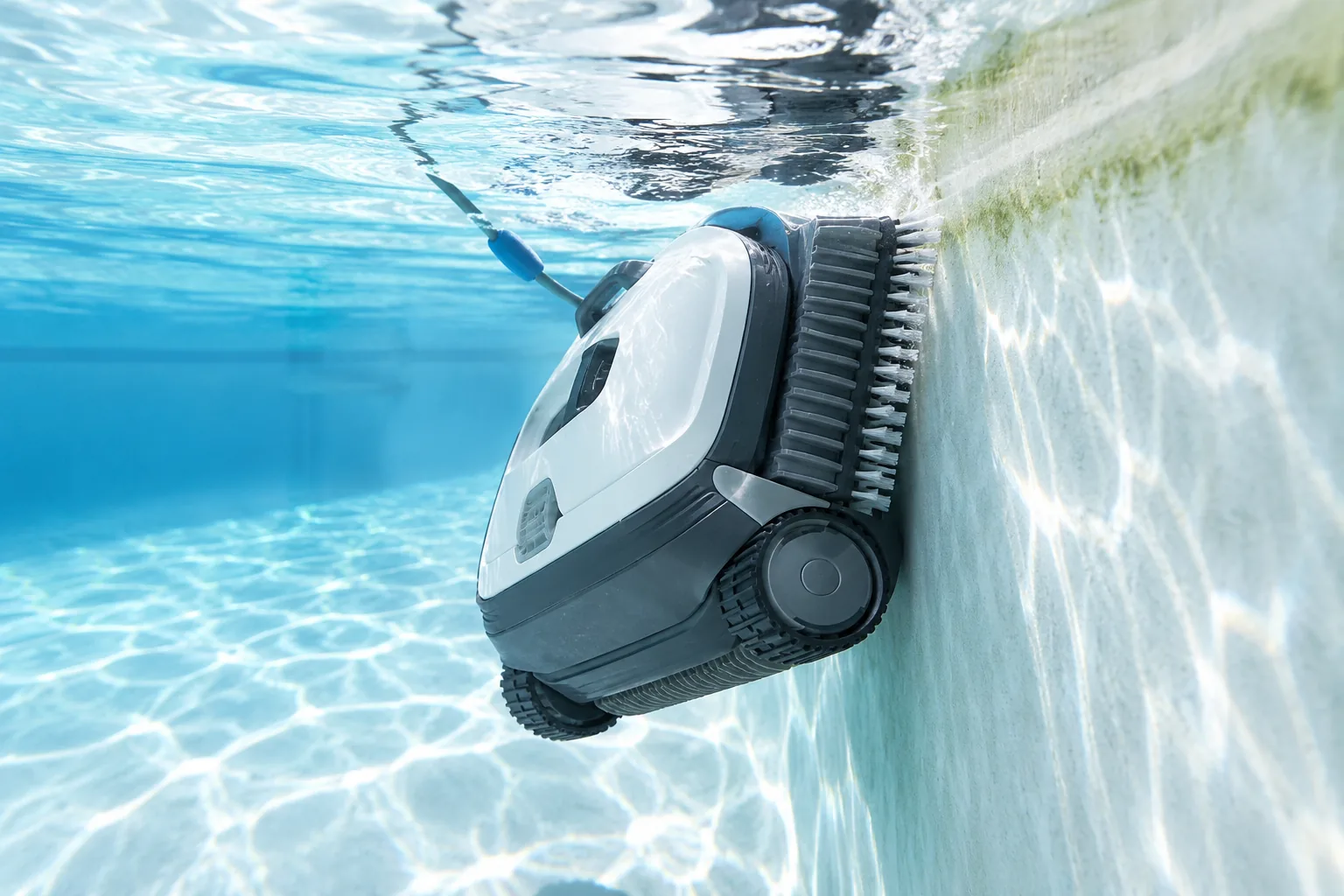
A robot can help clear algae and collect some of it. It can't stop algae growing. That's a disinfectant job: the health guidance and the maker manuals we read both put it that way.
What the health guidance says. CDC's Model Aquatic Health Code is written for public pools, hot tubs and splash pads 22, not home pools. But its algae notes explain why a robot alone can't fix the problem: - Algae is harder to control than most germs. The 2024 Annex says algae "are more difficult to control than most bacteria and viruses" and may need more free chlorine, or less stabilizer relative to it. It lists sunlight, temperature, and nitrates and phosphates as factors 19. - Chemicals need brushing. "Most algaecides are reasonably effective when applied according to their EPA accepted label directions and the application is coupled with frequent and thorough brushing" 20. - Algae is a cue to check circulation. The EPA doesn't consider pool algae pathogenic (disease-causing) 21. But the same Annex ties algae growth and waterborne illness to the same thing: "dead spots" where disinfectant isn't at adequate concentrations 18. The annex doesn't say algae itself makes water unsafe. Our reading: if algae keeps growing in one spot, check your chlorine and circulation there.
What the makers say. Maytronics' Dolphin M550 manual lists "Algae on walls" and "Unsuitable pH level" as reasons the robot won't climb. Its fix: "Check the level of chemicals in the water. Improper levels may allow the growth of algae, making the walls slippery. If so, adjust the levels and scrub the walls" 16. Wybot's FAQ says its robot "is designed for debris cleaning, not water quality management", and should be used with "proper chemical treatment" 13.
So, where does a robot help? With some of the wall work and the cleanup: - Wall work: the CDC annex pairs algaecide with "frequent and thorough brushing" 20. The Sora 30, Scuba X1, Wybot C2 and Seauto SAT30 all list wall and waterline cleaning 6101214, so they may cover some of that work. Aiper's page goes further: it says the Scuba X1's waterline cleaning removes "dirt, algae, and stubborn pool grim" and eliminates "the need for manual scrubbing or harsh chemicals" 35. That's a maker claim with no measure behind it, and it sits against the Dolphin manual's own fix, which still includes "scrub the walls" 16, and CDC's advice to pair algaecide with brushing 20. None of these pages says how well a robot lifts algae, so don't count on the robot alone. - Cleanup: once algae is dead and settles, an ultra-fine filter collects more of it than a standard one, on paper 30. Use the standard basket first so the fine filter doesn't clog 7.
Don't run the robot after a flocculant. If you use a flocculant or clarifier to clear the water, the Dolphin M550 manual says not to use the robot, because "these substances obstruct and damage the robot's filters" 17.
For the full answer on pumps, filters and chemicals, see does a pool robot replace your pump, filter or chemicals?
Pollen and bugs
Pollen and bugs float, so a skimmer is the tool. Beatbot lists pollen and small insects for the iSkim 2. Betta lists "leaves, dust, pollen, insects, and pet hair" for the SE Plus 4. Aiper's EcoSurfer S2 page labels insects, but not pollen 3.
Pollen is the one place the specs don't add up neatly. Pollen and spore grains run from about 2 µm to over 300 µm. Nettle pollen, one of the smallest grains, is about 10 µm 25, which is 15 to 55 times smaller than the 150–550 µm skimmer meshes we read 31. Makers still list pollen, and we can't confirm how much any skimmer holds back. Your pool's own filter and circulation do the rest 13.
Why the surface matters at all. CDC's annex notes that "much of the dirt, oil, bacteria, floating debris, and possibly undissolved chemicals are in the top inch of water" 18. That top inch is where a skimmer works, and where most of the robots on this page don't 61214.
If pollen is your main problem and you're choosing a skimmer, the model-by-model comparison is in solar pool skimmer vs robotic pool cleaner.
Which filter to fit, and when
The makers that give a rule agree: the standard basket for leaves and heavy debris, the ultra-fine filter for fine dust. Beatbot and Maytronics both say not to start a dirty pool on the ultra-fine filter 715.
| Maker | Coarse or standard filter | Ultra-fine filter | The rule they give |
|---|---|---|---|
| Aiper (Scuba X1) | Filter basket, for "leaves and twigs" 10 | 3 µm MicroMesh, for "dust and algae" 10 | 3 µm filter "perfect in low-debris settings"; rinse it after each use 10 |
| Beatbot (Sora 30, Sora 70) | 150 µm standard basket 68 | Accessory: 400 µm outer basket plus 3 µm inner filter 79 | "Use the original Standard Filter Basket for the initial cleaning to remove large debris"; using the ultra-fine basket first "may cause rapid clogging" 7 |
| Maytronics (Dolphin M550, corded) | Fine filter basket 15 | Ultra-fine filter panels 15 | "If the pool is very dirty, remove the ultra-fine filters"; clean without them, then put them back 15 |
| Wybot (C2) | 180 µm cartridge 12 | 10 µm filter 12 | Run your pool's circulation and filtration first if the water is very dirty 13 |
Two availability notes. Beatbot's Sora 30 product page still says its 3 µm filter is coming "in the coming months", while the accessory page is already selling it 67. The Sora 70 version was a pre-order, shipping from early November, when we checked 9. The Dolphin manual gives no micron figures for its filters 15.
If you buy for fine dust or algae cleanup, look for a robot that ships with an ultra-fine option, such as the Aiper Scuba X1 10 or the Wybot C2 12, or one with an ultra-fine accessory, such as the Beatbot Sora 30 7. If your load is mostly leaves, basket size and intake matter more than microns 16.
What no pool cleaner here can do
Check this list before you buy. It applies to every skimmer and robot on this page unless we say otherwise.
- Skimmers can't reach the floor, walls or waterline, and can't pick up sediment that has settled 5.
- Most robots here can't clean the surface. Of the robots whose cleaning areas we list, only the Sora 70 and Aiper's X1 Pro Max include it 810. The Sora 30, Scuba X1, Wybot C2 and Seauto SAT30 list the floor, walls and waterline but not the surface (the Sora 30 adds shallow platforms) 6101214.
- Standard robot filters can't hold back silt, on paper: it's smaller than their 150–250 µm mesh 30.
- Ultra-fine filters clog under heavy debris. Beatbot warns of "rapid clogging" if you use one first 7, and the Dolphin manual says to remove them in a very dirty pool 15.
- No robot or skimmer prevents algae or balances your water. Wybot says so for its robot 13, and the CDC annex treats algae control as a disinfectant job 19.
- A robot can't fix a leaking sand filter. It can only keep collecting the sand 11.
- Don't run a robot after flocculant or clarifier, per the Dolphin manual 17.
- Specs aren't capture rates. Micron ratings and debris lists are the makers' own; we haven't measured what any device catches.
When a robot won't climb or keeps circling, algae or water chemistry can be the cause, per the Dolphin M550 manual 16. See pool robot won't climb, sink or turn? Fixes by symptom.
Country notes
In Australia: gum leaves are the defining load. A river red gum leaf runs 10–20 cm long 27, so check basket size and the intake opening, not just the micron rating 632. Empty baskets after every run in leaf and storm season 1511.
In the US: CDC recommends home pools keep pH at 7.0–7.8 with at least 1 ppm free chlorine, or at least 2 ppm with cyanuric acid, and testing at least twice a day 23. A robot cleans up; it doesn't change those numbers. We haven't confirmed FCC status for the models on this page; see the US FCC robot rule explained.
Before you buy
From our store: we list our own models here only after we've verified the supplier's documents (spec sheet, FCC ID where relevant, battery test report). Until then, use the debris table above. See the pool-robot department
Buying from any store: before you pay, check whether import duty, tax and fees are already in the price, or whether they'll be collected from you on delivery. See buying a robot from China: the delivered-price guide.
How Robot Central handles it: Import fees paid by our shipping partner. Nothing due at the door. We don't charge or collect GST anywhere 34.
Whether a robot's battery lasts long enough for your pool is a separate check: see cordless pool robot battery life vs pool size.
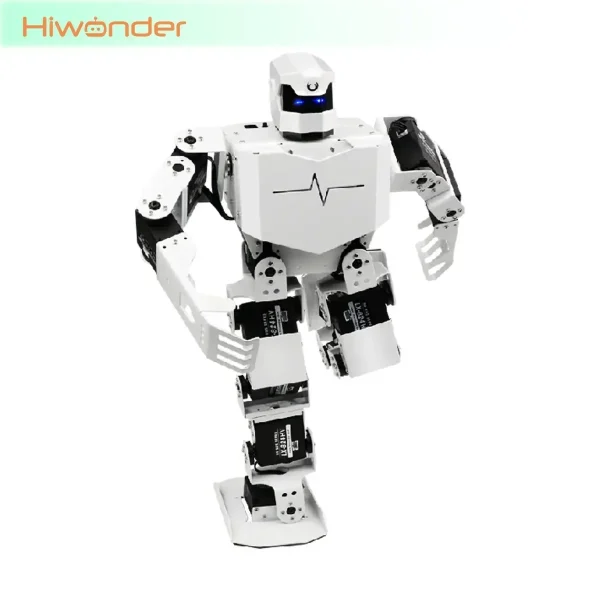
Hiwonder H5S 16-DOF Humanoid Robot Kit, Programmable, Assembled
16 high-voltage serial bus servos on an aluminum alloy body

MaxArm Desktop Robot Arm Kit, ESP32, Python and Arduino
Ships assembled, with an open-source ESP32 controller and bus servos
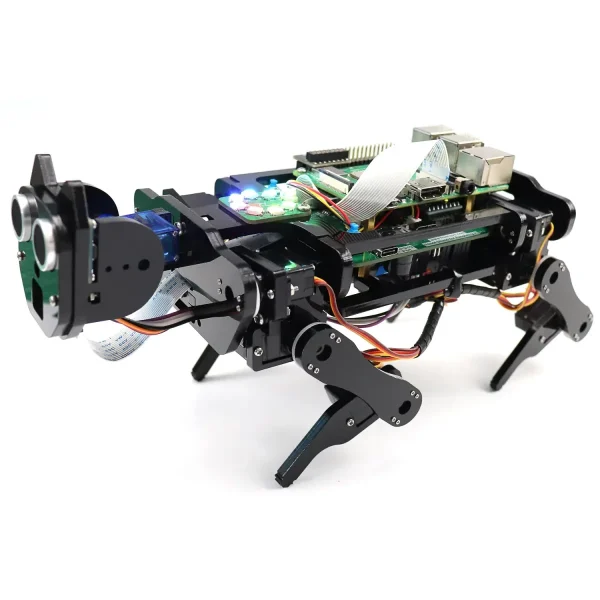
Freenove Robot Dog Kit for Raspberry Pi 5, 4 and Zero 2 W
Four-legged robot dog kit with 13 servos, a camera and an ultrasonic sensor
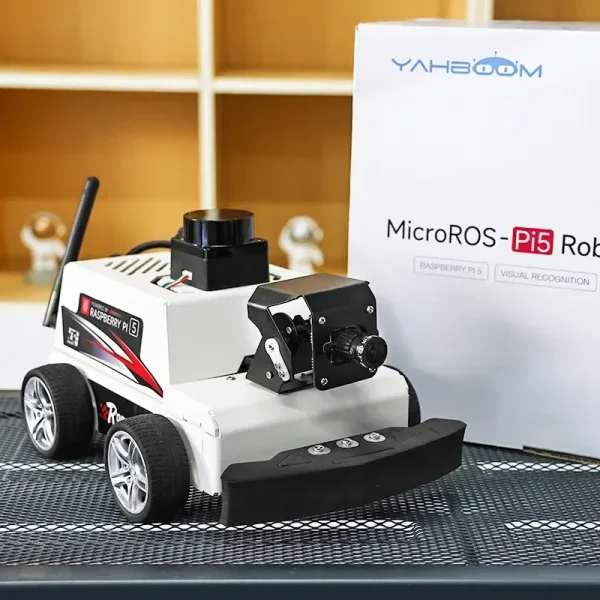
Yahboom MicroROS-Pi5 ROS2 Robot Car with Lidar for Raspberry Pi 5
MS200 360° lidar in every version, for SLAM mapping and navigation
Delivered prices, import fees paid by our shipping partner.
FAQ
Do robotic pool cleaners pick up algae?
They can help clear it and collect some of it, but they can't stop it. Wall-climbing robots list wall and waterline cleaning 6101214, and Aiper and Beatbot name algae for their 3 µm filters 107. Stopping algae is a chlorine and pH job: CDC's annex says algaecides work when "coupled with frequent and thorough brushing" 20, and the Dolphin M550 manual says to "adjust the levels and scrub the walls" 16.
Will a pool robot pick up dead algae?
Some of it. Algae is microscopic 26, so an ultra-fine filter collects more than a standard one on paper 30. Start with the standard basket and switch to the ultra-fine filter after, or it may clog quickly, Beatbot warns 7. Don't run the robot if you've just added flocculant or clarifier 17.
Will a pool robot pick up sand?
Yes, within its filter's limits. Sand is 50 µm to 2 mm 2429. A standard 150–250 µm robot filter holds back the coarser grains; the finest sand needs a 3 µm or 10 µm filter 301012. Beatbot lists sand for the Sora 30 and Sora 70 68.
Do robotic pool cleaners pick up fine dust?
Only with an ultra-fine filter, on paper: silt (2–50 µm) is smaller than the 150–250 µm standard filters 2430. Wybot says its robot is "designed for debris cleaning, not water quality management or ultra-fine filtration", so keep running your pool's own filter 13.
What's the best pool cleaner for leaves?
It depends on whether they float or sink. For floating leaves, a solar skimmer with a big basket (9 L on the iSkim 1) or a robot that lists surface cleaning, such as the Sora 70 8. For sunken leaves, a robot on its standard basket, which Aiper names for "leaves and twigs" 10. For long gum leaves, check the intake opening too 632.
Which pool skimmer suits pollen?
The iSkim and Betta SE Plus both list pollen; the EcoSurfer S2 page doesn't 243. The smallest pollen grains, around 10 µm, are far smaller than skimmer mesh 2531, so no maker spec tells you how much a skimmer holds back. Your pool's own filter still matters 13. Model details are in solar pool skimmer vs robotic pool cleaner.
Why does my robot keep picking up sand?
It may be coming from your pool's sand filter: Aiper lists "Leakage from sand filters" as one source of fine sand 11. If so, a robot treats the symptom; have the filter checked.
Can I run my robot after adding flocculant?
No, per the Dolphin M550 manual: "Do not use the pool cleaner if you have added liquid flocculant or any other clarifier to the pool water. These substances obstruct and damage the robot's filters" 17. Check your own model's manual.
Documents we checked
| Document | Model or topic | Type | Checked |
|---|---|---|---|
| Beatbot iSkim product page | iSkim | Manufacturer spec page | 2026-10-23 |
| Aiper EcoSurfer S2 product page | EcoSurfer S2 | Manufacturer spec page | 2026-10-23 |
| Betta SE Plus product page (bettabot.com) | SE Plus | Manufacturer spec page | 2026-10-23 |
| Beatbot buying guide, solar skimmer vs robot (updated 19 May 2026) | Skimmer limits | Manufacturer guide | 2026-10-23 |
| Beatbot Sora 30 and Sora 70 product pages; Ultra-Fine Dual Filter Basket pages (Sora 30, Sora 70) | Sora 30, Sora 70 | Manufacturer spec and accessory pages | 2026-10-23 |
| Aiper Scuba X1 product page (with X1 Pro and Pro Max spec table) | Scuba X1 range | Manufacturer spec page | 2026-10-23 |
| Wybot C2 product page and FAQ (wybotpool.com) | C2 | Manufacturer store page | 2026-10-23 |
| Seauto SAT30 product page (seautorobots.com) | SAT30 | Manufacturer store page | 2026-10-23 |
| Maytronics Dolphin M550 user instructions (AU) | M550 (corded) | Manufacturer manual | 2026-10-23 |
| CDC, 2024 Model Aquatic Health Code Annex, 5th edition | Algae, debris, circulation | Federal health guidance (public pools) | 2026-10-23 |
| CDC, home pool and hot tub water treatment and testing | pH and chlorine | Federal health guidance | 2026-10-23 |
| VicFlora, Eucalyptus camaldulensis | Gum-leaf size | Botanic-garden flora | 2026-10-23 |
Last checked: 2026-10-23.
Keep reading
- Choose: Pool robots and solar skimmers: which one your pool needs · Solar pool skimmer vs robotic pool cleaner · Robots on vinyl, fiberglass, concrete and pebblecrete
- Use: Pool-robot filters: fine vs ultra-fine · Won't climb, sink or turn? Fixes · Pump, filter and chemicals · Battery life vs pool size
- Tools: Pool fit check
Sources and fact table
Every number on this page links to a row below: the claim, how strong the evidence is, the source, and when we checked it.
Fact table (34 facts)
| ID | Claim | Evidence | Source | Checked |
|---|---|---|---|---|
| F1 | Beatbot iSkim basket, mesh and coverage | Supplier-stated | beatbot.com | 2026-10-23 |
| F2 | Beatbot iSkim debris list | Supplier-stated | beatbot.com | 2026-10-23 |
| F3 | Aiper EcoSurfer S2 basket, mesh and debris labels | Supplier-stated | aiper.com | 2026-10-23 |
| F4 | Betta SE Plus basket mesh and debris list | Supplier-stated | bettabot.com | 2026-10-23 |
| F5 | What solar skimmers can't do; leaves float then sink | Supplier-stated | beatbot.com | 2026-10-23 |
| F6 | Beatbot Sora 30 filter, basket, intake, debris list, cleaning areas | Supplier-stated | beatbot.com | 2026-10-23 |
| F7 | Beatbot Ultra-Fine Dual Filter Basket (Sora 30): layers, use, order | Supplier-stated | beatbot.com | 2026-10-23 |
| F8 | Beatbot Sora 70 cleaning areas, filter, basket, intake, debris list | Supplier-stated | beatbot.com | 2026-10-23 |
| F9 | Beatbot Ultra-Fine Dual Filter Basket (Sora 70) | Supplier-stated | beatbot.com | 2026-10-23 |
| F10 | Aiper Scuba X1 filter guidance, basket, cleaning areas | Supplier-stated | aiper.com | 2026-10-23 |
| F11 | Aiper Scuba X1 page: where debris comes from | Supplier-stated | aiper.com | 2026-10-23 |
| F12 | Wybot C2 filters, capacity, cleaning areas | Supplier-stated | wybotpool.com | 2026-10-23 |
| F13 | Wybot C2 FAQ: dirty water and water quality | Supplier-stated | wybotpool.com | 2026-10-23 |
| F14 | Seauto SAT30 filter and cleaning areas | Supplier-stated | seautorobots.com | 2026-10-23 |
| F15 | Dolphin M550 manual: filters and very dirty pools | Supplier-stated | dowdens.com.au | 2026-10-23 |
| F16 | Dolphin M550 manual: algae and climbing | Supplier-stated | dowdens.com.au | 2026-10-23 |
| F17 | Dolphin M550 manual: flocculant | Supplier-stated | dowdens.com.au | 2026-10-23 |
| F18 | CDC MAHC Annex: surface debris and dead spots | cdc.gov | 2026-10-23 | |
| F19 | CDC MAHC Annex: algae control | cdc.gov | 2026-10-23 | |
| F20 | CDC MAHC Annex: algaecides need brushing | cdc.gov | 2026-10-23 | |
| F21 | CDC MAHC Annex: EPA view of algae | cdc.gov | 2026-10-23 | |
| F22 | CDC MAHC edition and scope | cdc.gov | 2026-10-23 | |
| F23 | CDC home pool chemistry | cdc.gov | 2026-10-23 | |
| F24 | Sand, silt and clay size limits | Secondary (university) | nrcca.cals.cornell.edu | 2026-10-23 |
| F25 | Pollen grain sizes | Secondary (university) | botany.unibe.ch | 2026-10-23 |
| F26 | Green alga cell size (for scale) | Secondary (database) | bionumbers.hms.harvard.edu | 2026-10-23 |
| F27 | River red gum adult leaf size | vicflora.rbg.vic.gov.au | 2026-10-23 | |
| F29 | Unit conversions | Calculated | nrcca.cals.cornell.edu | 2026-10-23 |
| F30 | Filters vs sand and silt, on paper | Calculated | nrcca.cals.cornell.edu | 2026-10-23 |
| F31 | Skimmer mesh vs pollen, on paper | Calculated | botany.unibe.ch | 2026-10-23 |
| F32 | Gum leaf vs Beatbot intake, on paper | Calculated | vicflora.rbg.vic.gov.au | 2026-10-23 |
| F33 | Algae cell vs 3 µm filter, on paper | Calculated | bionumbers.hms.harvard.edu | 2026-10-23 |
| F34 | Robot Central delivery and import-fee policy | Owner policy | Robot Central policy | 2026-10-22 |
| F35 | Aiper Scuba X1 waterline algae claim | Supplier-stated | aiper.com | 2026-10-23 |
Full source list
Sources
- Beatbot, iSkim product page: beatbot.com
- Aiper, EcoSurfer S2 product page: aiper.com
- Betta, SE Plus product page: bettabot.com
- Beatbot, "Solar Pool Skimmer vs. Robotic Pool Cleaner" (brand guide, updated 19 May 2026): beatbot.com
- Beatbot, Sora 30 product page: beatbot.com
- Beatbot, Ultra-Fine Dual Filter Basket (Sora 30): beatbot.com
- Beatbot, Sora 70 product page: beatbot.com
- Beatbot, Ultra-Fine Dual Filter Basket (Sora 70): beatbot.com
- Aiper, Scuba X1 product page: aiper.com
- Wybot, C2 product page: wybotpool.com
- Seauto, SAT30 product page (Seauto-branded store): seautorobots.com
- Maytronics, Dolphin M550 user instructions (AU, hosted by Dowdens): dowdens.com.au
- CDC, 2024 Annex to the Model Aquatic Health Code, 5th edition (PDF pages 63, 149, 168–169): https://www.cdc.gov/model-aquatic-health-code/media/pdfs/2024/11/5th-Ed-MAHC-Annex-508.pdf
- CDC, Model Aquatic Health Code, "At a glance": https://www.cdc.gov/model-aquatic-health-code/php/our-work/index.html
- CDC, Home pool and hot tub water treatment and testing (dated 10 May 2024): https://www.cdc.gov/healthy-swimming/about/home-pool-and-hot-tub-water-treatment-and-testing.html
- Cornell University, NRCCA study resources, basic soil properties (sand, silt and clay sizes): https://nrcca.cals.cornell.edu/soil/CA1/CA0103.php
- University of Bern, "Size and production of microspores" (pollen sizes): botany.unibe.ch
- Harvard BioNumbers, Chlorella vulgaris cell diameter: https://bionumbers.hms.harvard.edu/bionumber.aspx?id=101481
- Royal Botanic Gardens Victoria, VicFlora, Eucalyptus camaldulensis (River Red-gum): https://vicflora.rbg.vic.gov.au/flora/taxon/b81ef7c6-89a0-45d7-9b2b-cebb16c7033a
- Robot Central delivery and import-fee policy (internal; owner decision, 2026-10-22)
Researched and drafted with AI assistance from the sources listed; fact-checked before publishing. The Robot Central Spec Desk is the name our editorial team writes under. We haven't used the products on this page ourselves; comparisons come from published specs and manuals. Corrections: [corrections email]. Every fix is logged on this page.