On this pageContents
- How a window robot finds an edge with no frame
- Frameless: yes, no or with a note, model by model
- The in-between edge: thin frames, channels and clamps
- Glass balustrades: four checks before you start
- Shower screens: dry, open and clear
- What a window robot can't do on frameless glass
- Which to choose: a decision table from published specs
- FAQ
- From our store
- Documents we checked
- Last checked
The short answer: Usually yes on a single flat pane, with conditions. Ten of the eleven models we checked either list frameless glass or describe a sensor for unframed edges 1121617222425272830. But "frameless" on a spec sheet means the robot can find an unframed edge and turn back. Ecovacs's manuals still say not to use it across a gap between two frameless panes or on glass with holes, and to start it more than 10 cm in from an unframed edge 34. A balustrade or pool fence with gaps between its panels gets cleaned one panel at a time. A shower screen has to be dry first 18.
This page goes deeper on one question from our pillar guide, Window-cleaning robots, honestly. The general limits (frames and tracks, greasy glass, weather, pads and fluids) are covered there, so we don't repeat them here.
Every number below has a source tag like 4. The full list is at the bottom. Robot Central also runs a robot store. Our own window robots aren't in this page's tables: we'll list them only after we've verified the supplier's documents.
How a window robot finds an edge with no frame
A framed window is the easy case. The frame is a small wall the robot can sense or bump into. Frameless glass just stops, and the robot has to notice it's running out of glass before its suction seal slides off the edge.
The makers describe five ways of doing that:
| Method | How it works, in the maker's words | Models that use it |
|---|---|---|
| Optical corner sensors (optocoupler) | "When WINBOT's Spherical Sensors head extends beyond the glass, the machine recognizes the frameless glass and retreats." 12 | Ecovacs WINBOT W2S OMNI, W2 PRO OMNI, mini 2, W3 OMNI 2161715 |
| Air-pressure monitoring | Watches the air pressure inside the suction chamber, tops it up, and "detects low steps greater than 2mm" 13. Ecovacs describes this for low steps, not unframed edges | Ecovacs WINBOT W3 OMNI |
| Edge-leakage sensing | Detects air leaking in at a frameless edge, or between two panels 242527 | HOBOT-2S, HOBOT-S7 Pro, HOBOT SP10 |
| Laser distance sensors | "The laser sensor measures the distance between the glass and the device precisely" 28 | HOBOT-298 |
| Corner sensors (Kärcher's description) | "The four corner sensors also detect the edges of frameless glass surfaces" 30 | Kärcher RCW 4 |
What they have in common: the robot only knows it has reached the edge when a sensor pokes past the glass or air starts leaking in. That's why the manuals tell you to:
- keep the sensors clear of the cleaning pad 2932;
- start well in from an unframed edge: more than 10 cm for Ecovacs, and 10 cm from the frame for the HOBOT-298 329. Start an Ecovacs robot too close on frameless glass and it says "Please avoid the window corners"; the fix is to re-attach it more than 10 cm from the corners 9.
HOBOT says other brands use "spring-supported corner sensors that may fail to detect gaps smaller than 5mm" 26. That's one maker's claim about its rivals, and we haven't seen it checked independently.
One thing no maker we read publishes: how close the robot cleans to an unframed edge. Ecovacs says the W2S OMNI "reaches within 0.04 in of window edges" 36 and the mini 2 "wipes to within 1 mm of the frame" 17, but neither page says those figures hold where there's no frame. On frameless glass, check the strip along the edge when it's done, and wipe it by hand if it needs it.
Frameless: yes, no or with a note, model by model
From published specs and manuals, read on 2026-10-22. Not a test. Every row is Supplier-stated: it's what the maker says, and we haven't checked it independently. "Yes" means the maker lists frameless glass. It doesn't mean every frameless job is a fit; the checks in the next three sections apply to every model.
| Model | Frameless? | What the maker says | The note | Smallest pane |
|---|---|---|---|---|
| ECOVACS WINBOT W2S OMNI | Yes | "with Frame & Frameless"; optical edge sensor 12 | Manual: start more than 10 cm from an unframed edge; no gaps or holes 34 | 30 × 40 cm 1 |
| ECOVACS WINBOT W2 PRO OMNI (Australian page) | Yes | Lists "framless" windows (spelling as printed); optical edge sensor 16 | We didn't open this model's manual | 30 × 40 cm 16 |
| ECOVACS WINBOT W3 OMNI | With a note | The US page doesn't mention frameless glass 15. The Hong Kong/Macau manual describes a "Frameless Sensor" 12 | Ask Ecovacs to confirm for the version sold in your country | Not stated 15 |
| ECOVACS WINBOT mini 2 (US) | Yes | "with Frame & Frameless" 17 | US manual: no wet glass, nothing above 65% humidity, no gaps 1820 | 25 × 25 cm 17 |
| ECOVACS WINBOT Lite (Australia) | Yes | "with Frame & Frameless" 22 | Its Australian manual prints model WG853-15, the same model number as the US mini 2 manual 2318 | 25 × 25 cm 22 |
| HOBOT-S7 Pro | Yes | "The ultimate frameless windows detection solution"; detects air leakage between frameless panels; lists "Balcony Glazing" as a use 25 | No minimum pane size published | Not published 25 |
| HOBOT SP10 (iScraper) | Yes | Edge-leakage sensors for frameless edges and leaks between panels; says it detects edges precisely even with "gaps smaller than 5 mm or ultra-thin frames under 2 mm" 27 | Image captions include "Glass Fence"; no minimum pane size published | Not published 27 |
| HOBOT-2S | With a note | Its edge-leakage sensor detects air leakage at "the edge of the frameless windows" 24 | The page describes the sensor, not a list of suitable glass, and we found no 2S manual | Not published 24 |
| HOBOT-298 | Yes | "Applicable to frameless windows (Laser sensor detects the edge of the window)" 28 | Older model. Manual: keep the laser sensors uncovered and start 10 cm from the frame 29 | Not published 28 |
| Kärcher RCW 4 | With a note | Product page: "Even frameless glass surfaces are cleaned quickly and reliably" 30 | Its manual says it's "designed for cleaning vertical, framed glass surfaces" 31. The two disagree, so ask Kärcher before you rely on it | 40 × 40 cm 30 |
| Kärcher RCW 2 | No (not stated) | "The two side sensors reliably detect window frames and other obstacles" 33 | No frameless claim; treat it as a framed-glass robot | — |
For the same data alongside suction, backup battery and rope ratings, see the window-robot spec database (T8). The pillar's side-by-side spec table covers four of these models in full.
The in-between edge: thin frames, channels and clamps
Fully framed and fully frameless glass are the clear cases. The awkward one is a very low edge: the thin metal channel on a semi-frameless shower screen, a low glazing bead, or the lip of a clamp. Ecovacs's own numbers point in two directions here.
| What Ecovacs says | Figure | Source |
|---|---|---|
| Spec page: smallest frame the robot detects | 1 mm (mini 2, Lite); 2 mm (W2S OMNI) | 17222 |
| Manual troubleshooting: "cannot detect obstacles or frames with a height lower than…" | 1 mm (W3 OMNI); 2 mm (mini 2, US manual); 4 mm (W2S OMNI) | 142137 |
| Manual: frames that cause "insufficient air pressure" | Frame height under 2 mm (W2S OMNI) | 10 |
| Manual safety rule | "Do not use the Appliance on a framed glass with a frame smaller than 5 mm" | 518 |
Smallest frame the robot detects (spec page)
"Cannot detect" below this height (manual)
Safety rule: do not use on a frame smaller than
Millimeters, as printed on each page or manual. Spec-page detection figures sit well below the 5 mm manual rule, so read the manual rule as the one that counts.
So Ecovacs's spec pages say its robots detect frames of 1 to 2 mm, its manuals put the detection floor at 1 to 4 mm depending on the model, and its manuals still say not to use them on a frame under 5 mm 1721437518. Read the manual rule as the one that counts. Measure the lip of your channel or bead with a ruler. If it's under 5 mm, treat it as not a fit for an Ecovacs robot unless Ecovacs tells you otherwise in writing 5.
HOBOT makes the opposite pitch for the SP10: that it detects "ultra-thin frames under 2 mm" 27. We found no HOBOT manual rule on minimum frame height to check that against.
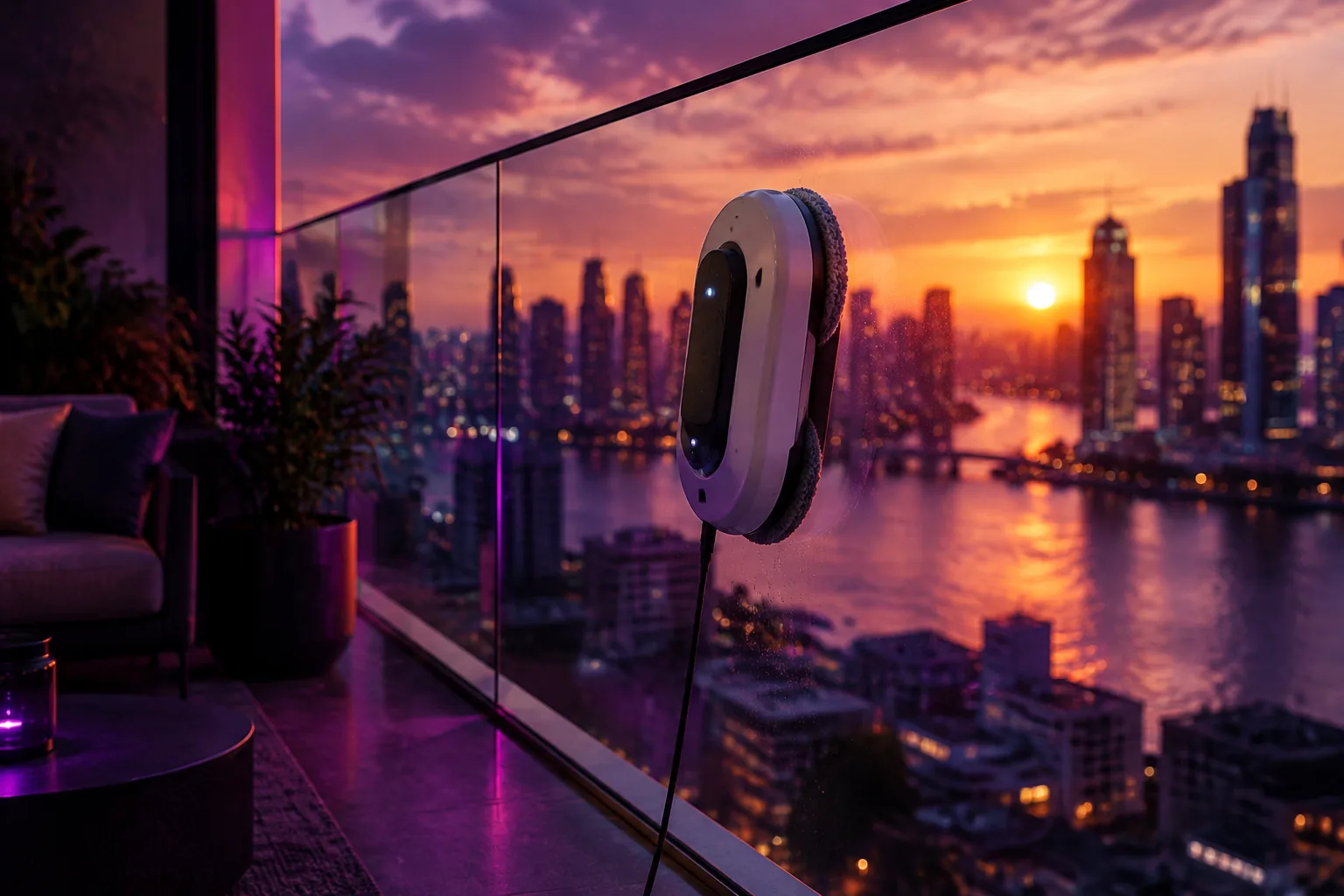
Glass balustrades: four checks before you start
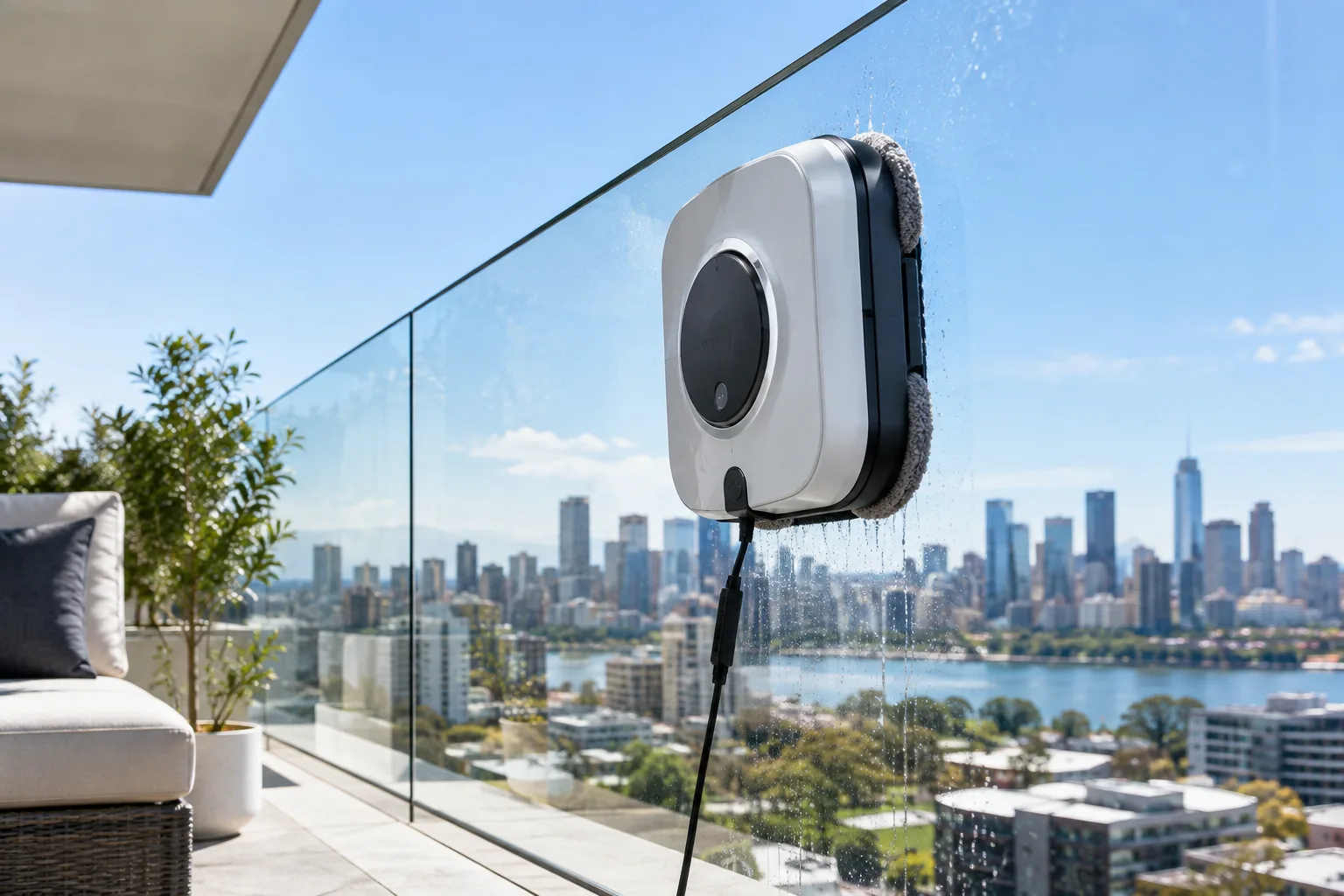
A frameless glass balustrade is usually a row of panels with an open top edge. Run through these four checks before you put a robot on one.
1. Is there a gap between the panels? Ecovacs says not to use its robots on "two pieces of adjacent, frameless glass with a gap between them, so as to prevent the Appliance from falling due to poor attachment" 4. The mini 2 manual puts it plainly: "Do not use WINBOT on the surface with gaps." 20 So clean one panel at a time, and lift the robot off to move it. HOBOT says the S7 Pro and SP10 detect air leaks between panels 2527. Neither page says the robot can cross the gap: they say it can detect one.
2. Are there holes or clamps? If your panels are bolted through holes in the glass, the same Ecovacs rule covers "a piece of glass with gaps or holes" 4. Clamps and fittings that stick out are a second problem. Ecovacs warns the robot "may get stuck" where the gap between a fitting and the glass or wall is close to its own height 7.
3. Is the panel big enough, and flat? Minimum panes run from 25 × 25 cm (WINBOT mini 2) to 40 × 40 cm (Kärcher RCW 4) in the specs we read 1730. Curved glass is on Ecovacs's "uneven windows" list 10. Upright glass is fine: Ecovacs and Kärcher both allow tilts up to ±45° 131.
4. Which face are you cleaning, and what's below it? The inside face of a balcony balustrade sits over your own balcony. The outside face sits over the drop. That's exterior use, and Ecovacs's rules for it are strict 11:
- tether it with the carabiner to "a strong indoor railing";
- only when "winds are calm, and it is not raining or snowing";
- nobody and nothing fragile under the working area;
- don't leave it unattended.
Kärcher says to take the robot off "in the event of strong wind or precipitation when in use outdoors" 32. The open top edge of a balustrade is an unframed edge with a drop behind it, so start more than 10 cm below it and stay with the robot 311. Anchoring the rope properly is covered in how to anchor a window robot's safety rope (G06).
The manual rule is a frame smaller than 5 mm 5.
Always confirm that your model lists frameless glass first 11722.
In Australia: A glass pool fence is outdoor glass, so the exterior-use rules above apply, including Ecovacs's tether to "a strong indoor railing" 11. A freestanding fence may have nowhere that qualifies, so ask the maker before you use a robot there. Ecovacs also says not to use or charge its robots above 40 °C 8, and Kärcher's operating range is 5 to 40 °C 32. On a hot day, check the temperature before you start. If there are gaps between the fence panels, clean one panel at a time 4. Ecovacs's Australian range includes the WINBOT Lite, listed "with Frame & Frameless" with a 25 × 25 cm minimum pane 22.
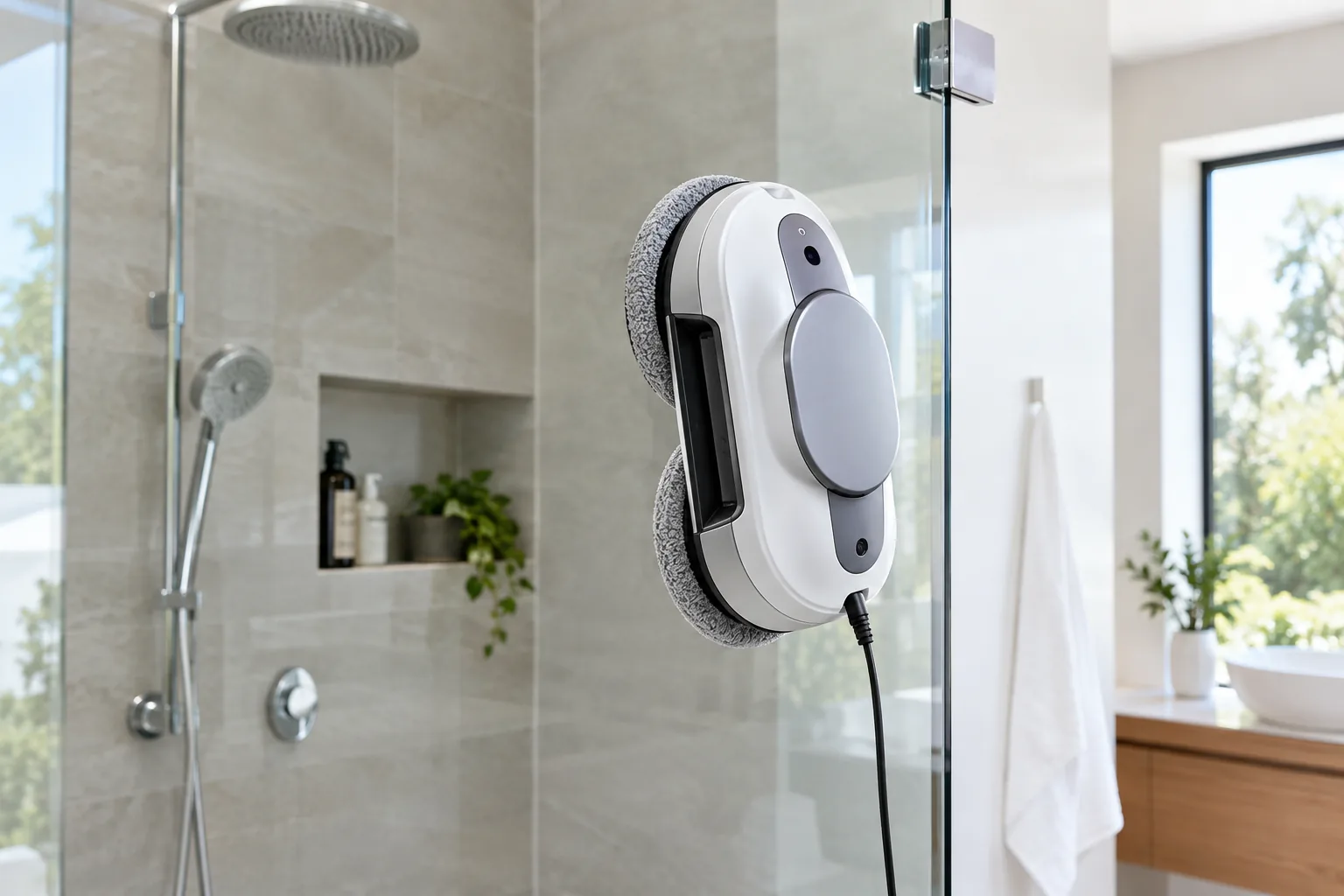
Shower screens: dry, open and clear
Shower glass is often frameless and usually within reach, which makes it a common job for a robot. The bathroom adds four conditions the manuals spell out.
- Dry the glass and air out the room first. The mini 2 US manual says not to use it on "wet or greasy windows" or above 65% humidity 18. The W2S OMNI and WINBOT Lite manuals set the limit at 85% humidity 823. Kärcher's range is 20–60% relative humidity, and its manual also rules out wet glass 3231. Don't run it straight after a shower.
- Open the door. Ecovacs: "To clean glass panel doors, open the door before attaching WINBOT to avoid WINBOT falling due to narrow door gaps." 7
- Check the handle and hinges. The W2S OMNI, W3 OMNI and Lite manuals say not to use the robot "on glass or mirrors with a handle height of 70~105 mm" 6. If the handle or hinges are bolted through the glass, that's "glass with gaps or holes" again 4.
- Keep it away from the tub. "Do not place or store Appliance where it can fall or be pulled into a tub or sink." 1923
Two more things to check:
- Small fixed panels may be under the robot's minimum pane size, so do those by hand 171.
- Semi-frameless screens with a low channel run into the 5 mm rule in the section above 5.
Upper limit for use. Kärcher's published range is 20–60% relative humidity, drawn at its 60% top. Don't run a robot straight after a shower.
Soap film and hard-water marks aren't mentioned by name in any manual we read. Greasy and oily glass is ruled out 1831. Mirrors need to be at least 4 mm thick for Ecovacs 5. More on mirrors and tiles is in can a window robot clean solar panels, skylights, mirrors or tiles? (G16).
What a window robot can't do on frameless glass
| A window robot can't… | From the manuals | Source |
|---|---|---|
| Cross a gap between two frameless panels | "Do not use on surfaces with gaps" | 420 |
| Work on glass with holes | Same clause: "a piece of glass with gaps or holes" | 4 |
| Be started close to an unframed edge | More than 10 cm in (Ecovacs); 10 cm from the frame (HOBOT-298) | 329 |
| Run on wet glass or in a steamy room | Humidity limits of 65% (mini 2), 85% (W2S OMNI) and 60% (Kärcher) | 18832 |
| Handle a frame lower than 5 mm (Ecovacs) | "Do not use… with a frame smaller than 5 mm" | 5 |
| Work on curved glass | Listed as "uneven windows" | 10 |
| Promise a clean right up to an unframed edge | No maker we read gives a figure for an unframed edge | 1736 |
| Be left alone on the outside of a balustrade | Tether indoors, calm and dry weather, nobody below, stay with it | 11 |
Which to choose: a decision table from published specs
Spec-sheet comparison, not a test. Robot Central doesn't rank robots. The table matches your glass to what the makers publish.
| Your glass | What to look for | Models whose makers list it | Can't do |
|---|---|---|---|
| Large single frameless panes (doors, fixed windows) | Frameless listed, and a minimum pane smaller than yours | WINBOT W2S OMNI: 30 × 40 cm 1. | Start more than 10 cm from the edge 3 |
| Small frameless panels (shower returns, small panes) | The smallest minimum pane | WINBOT mini 2 (US): 25 × 25 cm 17. · WINBOT Lite (Australia): 25 × 25 cm 22. | Dry glass only; not above 65% humidity (mini 2 US manual) 18 |
| Multi-panel frameless glass (balcony glazing, glass fences) | Sensing for leaks between panels | HOBOT-S7 Pro, HOBOT SP10 2527. | Neither page says it crosses a gap; clean one panel at a time where there's a gap 4 |
| Semi-frameless with a channel under 5 mm | A written OK from the maker | None for Ecovacs: its manuals rule it out 5 | — |
| Glass with holes (bolted fittings) | — | None: Ecovacs rules it out 4 | — |
| Kärcher RCW 4 owners | Check with Kärcher first: page and manual disagree 3031 | — | Manual: "framed glass surfaces" 31 |
Affiliate links are labeled "". No Amazon prices or star ratings are shown, by design. Kärcher isn't linked: we haven't verified an affiliate program for it.
US buyers: we list the FCC status of every model on this page as unconfirmed until we've looked up each FCC ID. What the FCC's robot rule means for sales is explained in The US FCC robot rule explained (L01).
→ Run the Fit check: answer frame, glass and location, and get yes, with a note, or not a fit.
Interactive tool coming soon.
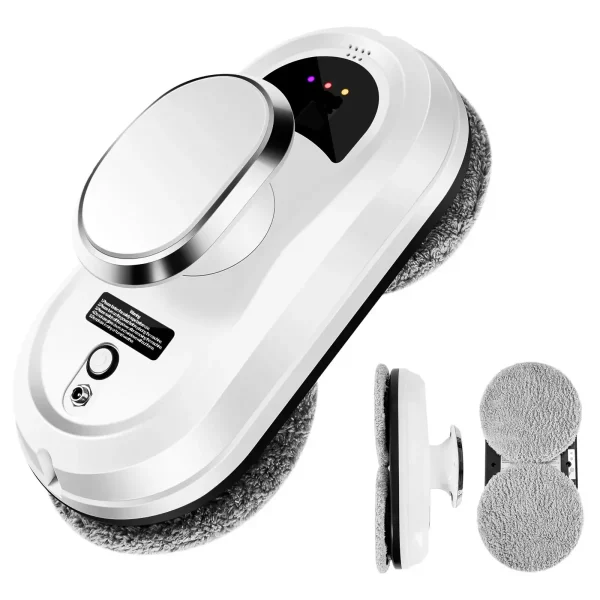
Smart Window Cleaning Robot with Remote Control, 110–240V
Three automatic cleaning routes, plus manual driving by remote
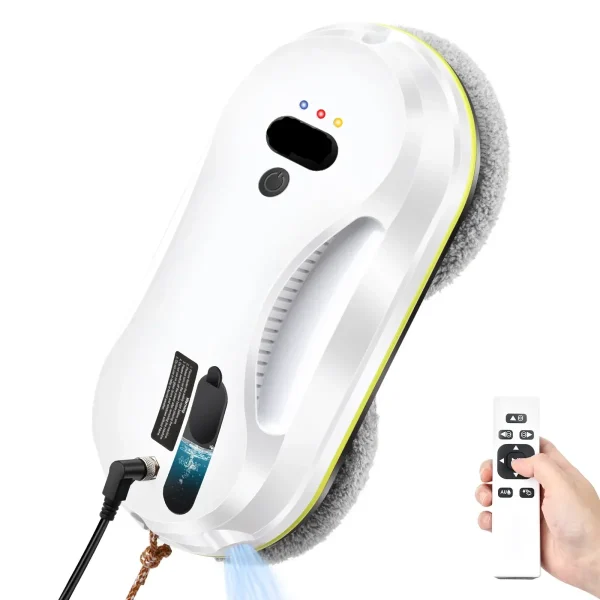
Window Cleaning Robot with Water Spray and Remote Control
Ultrasonic mist spray from a 40 ml tank; leave it empty for dry wiping
Delivered prices, import fees paid by our shipping partner.
FAQ
Will a window cleaning robot work on frameless glass?
Usually, if its maker lists frameless glass and you clean one flat pane at a time. Ecovacs lists "with Frame & Frameless" for the W2S OMNI, mini 2 and Lite 11722, and HOBOT describes frameless detection for the S7 Pro, SP10 and HOBOT-298 252728. Ecovacs's manuals still rule out gaps and holes, and ask you to start more than 10 cm from an unframed edge 34.
How does a window robot detect the edge of frameless glass?
With a sensor that notices it's running out of glass. Ecovacs uses optocoupler (optical) edge sensors; its W3 OMNI manual says the robot retreats when the spherical sensor head extends past the glass 212. HOBOT uses edge-leakage sensors that pick up air leaking in at the edge, or lasers on the older HOBOT-298 2428. Kärcher uses four corner sensors on the RCW 4 30.
Can a window robot clean a glass balustrade?
One panel at a time, if each panel is flat, big enough and has no holes. Ecovacs rules out "two pieces of adjacent, frameless glass with a gap between them" and glass with holes 4. The outside face, over a drop, counts as exterior use, with a tether to a strong indoor anchor, calm and dry weather, and nobody below 11.
Can I use a window cleaning robot on shower glass?
Yes, if the model lists frameless glass, the glass is dry and the room has aired out. The mini 2 US manual rules out wet glass and humidity above 65% 18. Open the door before you attach the robot 7, and keep it away from the tub 19.
Will it work on a glass pool fence?
Treat it like a balustrade outdoors: one panel at a time where there are gaps 4, calm and dry weather 11, and no use above 40 °C for Ecovacs 8. HOBOT's SP10 page shows a "Glass Fence" in its images 27, but no maker we read explains how to move between fence panels.
Will it fall off the top edge of a frameless panel?
The sensors are there to stop that, but no maker promises it. Ecovacs's manuals tell you to lock the safety tether to a strong indoor railing 11. Ecovacs tells you to keep people, pets and fragile things out of the area below, and not to leave the robot unattended 11. Start it more than 10 cm below the top edge 3.
Does edge detection mean it cleans edge to edge?
No. Edge detection makes the robot turn back at the edge. No maker we read says how close it gets to an unframed edge. Ecovacs's edge figures (0.04 in for the W2S OMNI, 1 mm from the frame for the mini 2) don't say they apply to frameless glass 3617. Check the edge strip and finish it by hand if needed.
What about a semi-frameless shower screen with a thin channel?
Measure the channel's height. Ecovacs's manuals say not to use its robots on a frame smaller than 5 mm, even though some of its spec pages say they can detect frames of 1 to 2 mm 5172. Below 5 mm, ask the maker before you use it.
Do window cleaning robots work on double glazing?
Yes, within the maker's thickness limits (3 mm minimum glass for Ecovacs 5): they clean the surface you put them on. Our pillar guide's glass table covers double-glazed, tinted and textured glass. For tinted and filmed glass, see which glass a window robot can handle (G04).
From our store
From our store: we list our own models here only after we've verified the supplier's documents (spec sheet, FCC ID where relevant, battery test report). Until then, use the tables above. See the window-robot department
How Robot Central handles delivery: Import fees paid by our shipping partner. Nothing due at the door 35. How import costs work at other overseas stores is in Buying a robot from China: the delivered-price guide.
Documents we checked
| Document | Publisher | What we used it for |
|---|---|---|
| WINBOT W2S OMNI, mini 2 and W3 OMNI US product pages 12151736 | Ecovacs | Frame type, sensors, minimum panes, edge reach |
| WINBOT W2 PRO OMNI and WINBOT Lite Australian product pages 1622 | Ecovacs | Frame type, minimum panes |
| WINBOT W2S OMNI Instruction Manual 3–1137 | Ecovacs | Gaps, holes, edges, doors, handles, humidity, exterior use, detection limits |
| WINBOT W3 OMNI Instruction Manual (Hong Kong/Macau) 12–14 | Ecovacs | How the frameless sensor works; detection limits |
| WINBOT mini 2 Instruction Manual (US) 18–21 | Ecovacs | Wet glass, humidity, tub, gaps, detection limits |
| WINBOT Lite Instruction Manual (Australia) 23 | Ecovacs | Model number, humidity, gaps, tub |
| HOBOT-2S, HOBOT-S7 Pro, HOBOT SP10 and HOBOT-298 product pages 24–28 | HOBOT Technology | Edge-leakage and laser sensing, frameless claims |
| HOBOT-298 user manual 29 | HOBOT Technology | Laser sensors, start position |
| RCW 4 product page; window-robot category page 3033 | Kärcher | Frameless claim (RCW 4); RCW 2 sensors |
| RCW 4 operating instructions 5.980-605.0 (11/25) 3132 | Kärcher | Intended use, vacuum loss, humidity, outdoor use |
| Robot Central delivery and import-fee policy, 2026-10-22 35 | Robot Central | Delivery line |
Last checked
2026-10-22 by The Robot Central Spec Desk. We'll update this page when a maker changes a product page or manual, when we add models, and on our quarterly review.
Changelog - 2026-10-22: First version, revised after fact-check (W2S OMNI edge-reach and detection-floor figures added; paraphrases tightened).
Sources and fact table
Every number on this page links to a row below: the claim, how strong the evidence is, the source, and when we checked it.
Fact table (36 facts)
| ID | Claim | Evidence | Source | Checked |
|---|---|---|---|---|
| F1 | ECOVACS WINBOT W2S OMNI: working conditions | Supplier-stated | ecovacs.com | 2026-10-22 |
| F2 | ECOVACS WINBOT W2S OMNI: edge and frame sensing | Supplier-stated | ecovacs.com | 2026-10-22 |
| F3 | ECOVACS W2S OMNI manual: frameless start position and surface | Supplier-stated | site-static.ecovacs.com | 2026-10-22 |
| F4 | ECOVACS W2S OMNI manual: gaps and holes | Supplier-stated | site-static.ecovacs.com | 2026-10-22 |
| F5 | ECOVACS W2S OMNI manual: thin frames and glass thickness | Supplier-stated | site-static.ecovacs.com | 2026-10-22 |
| F6 | ECOVACS W2S OMNI manual: handles | Supplier-stated | site-static.ecovacs.com | 2026-10-22 |
| F7 | ECOVACS W2S OMNI manual: glass panel doors and narrow gaps | Supplier-stated | site-static.ecovacs.com | 2026-10-22 |
| F8 | ECOVACS W2S OMNI manual: temperature and humidity | Supplier-stated | site-static.ecovacs.com | 2026-10-22 |
| F9 | ECOVACS W2S OMNI manual: 'avoid the window corners' prompt | Supplier-stated | site-static.ecovacs.com | 2026-10-22 |
| F10 | ECOVACS W2S OMNI manual: uneven windows and small panes | Supplier-stated | site-static.ecovacs.com | 2026-10-22 |
| F11 | ECOVACS W2S OMNI manual: exterior use and area below | Supplier-stated | site-static.ecovacs.com | 2026-10-22 |
| F12 | ECOVACS WINBOT W3 OMNI manual: frameless sensor | Supplier-stated | site-static.ecovacs.com | 2026-10-22 |
| F13 | ECOVACS WINBOT W3 OMNI manual: air pressure monitoring sensor | Supplier-stated | site-static.ecovacs.com | 2026-10-22 |
| F14 | ECOVACS WINBOT W3 OMNI manual: detection floor | Supplier-stated | site-static.ecovacs.com | 2026-10-22 |
| F15 | ECOVACS WINBOT W3 OMNI US page: what it states | Supplier-stated | ecovacs.com | 2026-10-22 |
| F16 | ECOVACS WINBOT W2 PRO OMNI (Australia page) | Supplier-stated | ecovacs.com | 2026-10-22 |
| F17 | ECOVACS WINBOT mini 2 US page: frameless and frame detection | Supplier-stated | ecovacs.com | 2026-10-22 |
| F18 | ECOVACS WINBOT mini 2 US manual: frames, wet glass and humidity | Supplier-stated | site-static.ecovacs.com | 2026-10-22 |
| F19 | ECOVACS WINBOT mini 2 US manual: tub or sink | Supplier-stated | site-static.ecovacs.com | 2026-10-22 |
| F20 | ECOVACS WINBOT mini 2 US manual: gaps | Supplier-stated | site-static.ecovacs.com | 2026-10-22 |
| F21 | ECOVACS WINBOT mini 2 US manual: detection floor and frameless start | Supplier-stated | site-static.ecovacs.com | 2026-10-22 |
| F22 | ECOVACS WINBOT Lite (Australia page) | Supplier-stated | ecovacs.com | 2026-10-22 |
| F23 | ECOVACS WINBOT Lite AU manual: model number and rules | Supplier-stated | site-static.ecovacs.com | 2026-10-22 |
| F24 | HOBOT-2S page: edge-leakage sensor | Supplier-stated | hobot.com.tw | 2026-10-22 |
| F25 | HOBOT-S7 Pro page: frameless detection and scenarios | Supplier-stated | hobot.com.tw | 2026-10-22 |
| F26 | HOBOT claim about other brands' sensors | Supplier-stated | hobot.com.tw | 2026-10-22 |
| F27 | HOBOT SP10 (iScraper) page: edge-leakage sensors | Supplier-stated | hobot.com.tw | 2026-10-22 |
| F28 | HOBOT-298 page: frameless | Supplier-stated | hobot.com.tw | 2026-10-22 |
| F29 | HOBOT-298 manual: laser sensors and placement | Supplier-stated | mail.hobot.com.tw | 2026-10-22 |
| F30 | Kärcher RCW 4 product page: frameless | Supplier-stated | kaercher.com | 2026-10-22 |
| F31 | Kärcher RCW 4 manual: intended use and vacuum loss | Supplier-stated | s1.kaercher-media.com | 2026-10-22 |
| F32 | Kärcher RCW 4 manual: environment and sensors | Supplier-stated | s1.kaercher-media.com | 2026-10-22 |
| F33 | Kärcher RCW 2: what the maker states | Supplier-stated | karcher.com | 2026-10-22 |
| F35 | Robot Central delivery and tax policy | Owner-stated | Robot Central policy | 2026-10-22 |
| F36 | ECOVACS WINBOT W2S OMNI US page: edge reach | Supplier-stated | ecovacs.com | 2026-10-22 |
| F37 | ECOVACS W2S OMNI manual: detection floor | Supplier-stated | site-static.ecovacs.com | 2026-10-22 |
Full source list
Sources
Accessed 2026-10-22. Fact IDs map to facts.csv.
- ECOVACS, WINBOT W2S OMNI (US product page): ecovacs.com [F1, F2, F36]
- ECOVACS, WINBOT W2S OMNI Instruction Manual: site-static.ecovacs.com [F3–F11, F37]
- ECOVACS, WINBOT W3 OMNI Instruction Manual (HK/MO): site-static.ecovacs.com [F12–F14]
- ECOVACS, WINBOT W3 OMNI (US product page): ecovacs.com [F15]
- ECOVACS, WINBOT W2 PRO OMNI (Australian product page): ecovacs.com [F16]
- ECOVACS, WINBOT mini 2 (US product page): ecovacs.com [F17]
- ECOVACS, WINBOT mini 2 Instruction Manual (US): site-static.ecovacs.com [F18–F21]
- ECOVACS, WINBOT Lite (Australian product page): ecovacs.com [F22]
- ECOVACS, WINBOT Lite Instruction Manual (AU): site-static.ecovacs.com [F23]
- HOBOT, HOBOT-2S product page: hobot.com.tw [F24]
- HOBOT, HOBOT-S7 Pro product page: hobot.com.tw [F25, F26]
- HOBOT, HOBOT SP10 product page: hobot.com.tw [F27]
- HOBOT, HOBOT-298 product page: hobot.com.tw [F28]
- HOBOT, HOBOT-298 user manual: mail.hobot.com.tw [F29]
- Kärcher, RCW 4 product page: kaercher.com [F30]
- Kärcher, RCW 4 operating instructions 5.980-605.0 (11/25): s1.kaercher-media.com [F31, F32]
- Kärcher, window cleaning robots (UK category page): karcher.com [F33]
- Robot Central delivery and import-fee policy (owner decision, 2026-10-22) [F35]
About this page. The Robot Central Spec Desk is the name our editorial team writes under. We research robots from published spec sheets, manuals and regulators' documents. We haven't used or measured the robots on this page. Researched and drafted with AI assistance from the sources listed; fact-checked before publishing. Spotted an error? Our corrections address isn't set up yet; until it is, please use the contact details on our site.